
Last updated November 15, 2026
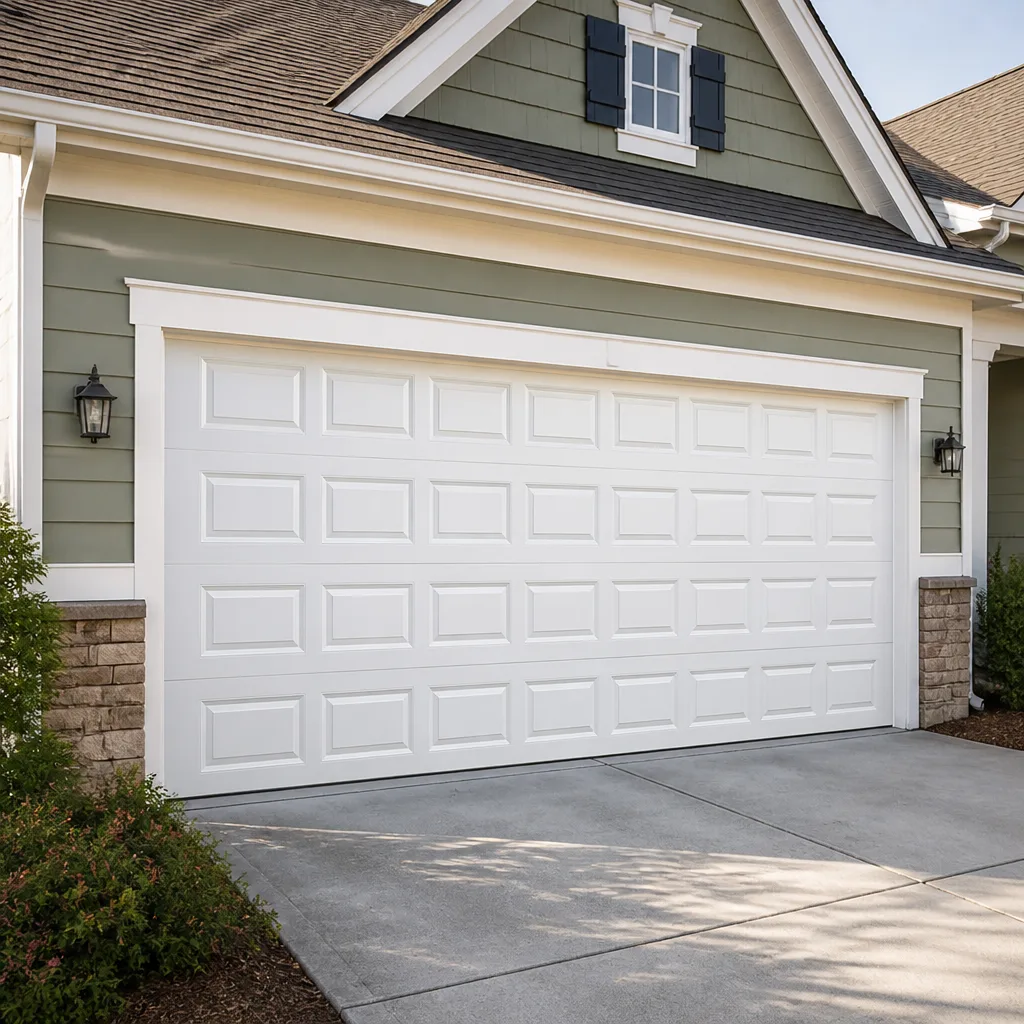 Raised-panel steel
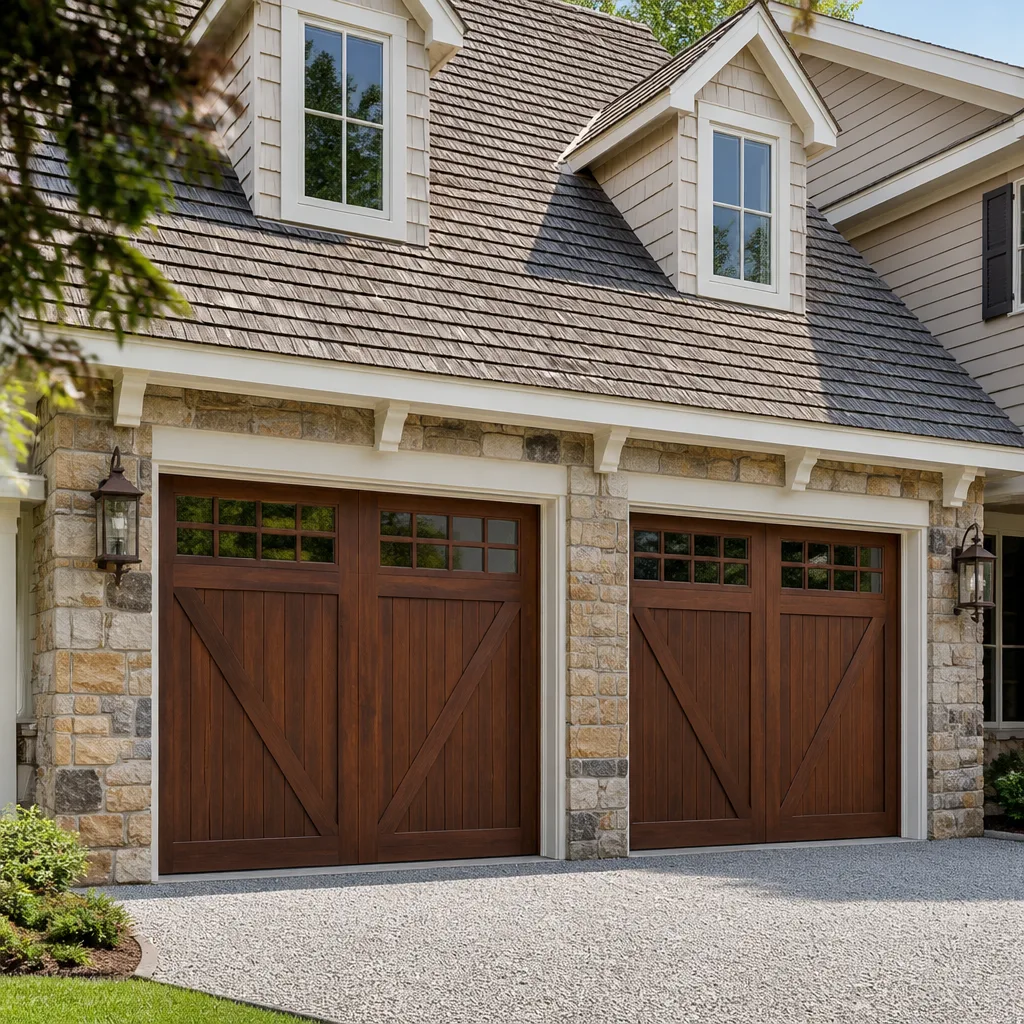 Carriage house
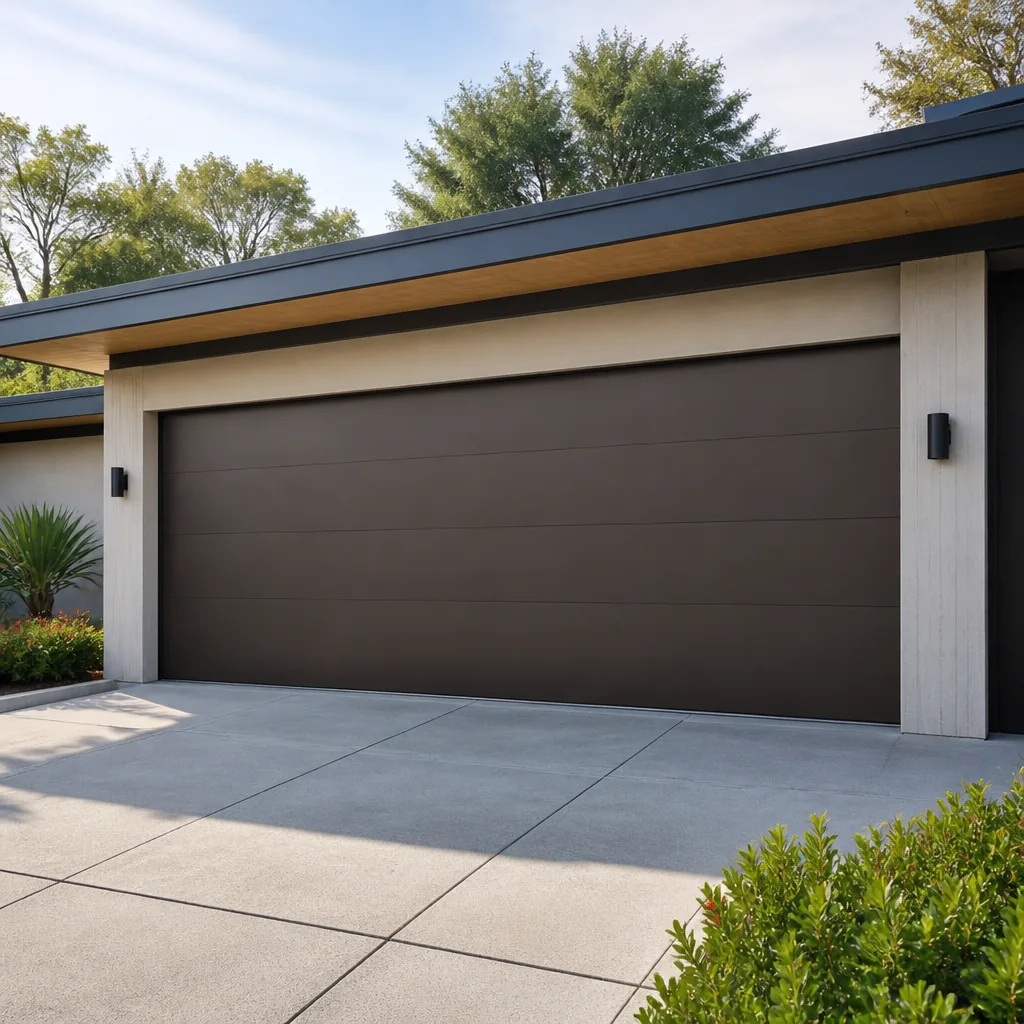 Modern flush
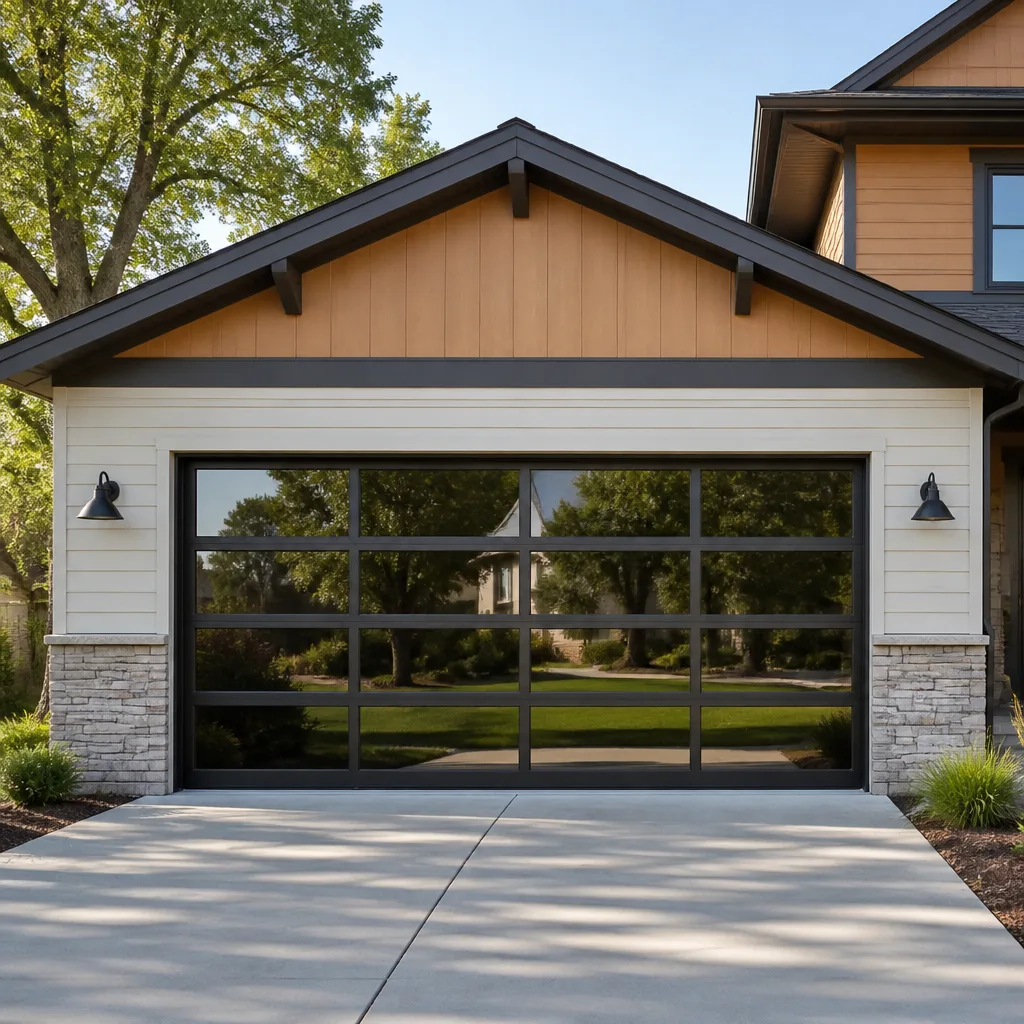 Full-view glass
 LiftMaster openers
 Chamberlain openers
Full 25-point door and opener safety check with every visit - springs, cables, rollers, tracks, and your LiftMaster or Chamberlain opener included
You get a price before we start. It does not change when the pro arrives.
Get your free estimateDIY vs Professional Garage Door: The Charleston Homeowner’s Decision Guide
Torsion springs on a standard residential garage door hold enough stored energy to cause a serious injury in the fraction of a second it takes to make one wrong move. That’s not a scare tactic; it’s just physics. Yet most of the DIY-versus-professional conversation online treats every garage door job as if it carries the same risk, which is where homeowners get into trouble. Some repairs are genuinely safe to handle yourself. Others have almost no margin for error. This guide breaks the work down task by task for Charleston homeowners, explains what the local climate does to certain fixes, and shows where DIY actually saves money versus where it quietly costs more.
Quick Answer
The safest DIY garage door tasks in Charleston are weatherstripping, lubrication, photo-eye sensor alignment, and remote or keypad programming. Torsion springs, cables, and cable drums should always go to a trained technician because the stored energy makes them dangerous to touch without the right tools and knowledge. Repairing panels, rollers, tracks, and opener systems is usually worth a professional call, especially in Charleston’s humidity, where makeshift fixes tend to fail faster than they would in a dry climate.
Styles & brands we work with
- Raised-panel steel
- Carriage house
- Modern flush
- Full-view glass
- LiftMaster openers
- Chamberlain openers
Table of Contents
- The DIY vs. Professional Task Breakdown
- Why Torsion Springs Are in a Different Risk Category
- How Charleston’s Humidity Changes the DIY Math
- How to Tell If That YouTube Repair Was Filmed in Your Climate
- The Honest Cost Comparison: When DIY Saves Money
- Safe DIY Tasks, Step by Step
- Common Mistakes to Avoid
- When to Call a Professional
The DIY vs. Professional Task Breakdown
Garage door work splits cleanly into low-risk tasks and high-risk tasks, and the split has nothing to do with how handy you are. It’s about what happens if the job goes wrong. A misaligned sensor means the door won’t close. A mishandled torsion spring can mean a trip to the emergency room. Use this breakdown as a starting filter.
- Safe to DIY: replacing bottom weather seal, lubricating hinges and rollers, aligning photo-eye sensors, programming a remote or keypad, tightening visible bolts on the track brackets, wiping down panels.
- Usually worth a pro in Charleston: track realignment, roller replacement, panel repair, opener motor or logic board issues, gear and sprocket wear on older Genie units, and any fix involving the door’s balance.
- Always a pro: torsion springs, extension springs, lift cables, cable drums, bottom brackets, and any residential door that has come off its tracks. These carry real injury risk and require specific tools.
Where homeowners most often go wrong is assuming the middle category is DIY because the fix looks simple on video. A bent track or a worn roller on a door that’s already slightly out of balance turns into a bigger job once the door has been forced through it a few dozen times. In our experience across Charleston, that middle category is where DIY attempts most often turn a small repair into a bigger one.
Why Torsion Springs Are in a Different Risk Category
Torsion springs are the horizontal spring mounted on the shaft above the door. When the door closes, the spring winds tighter; when it opens, the spring releases that energy to lift the door. A torsion spring on a typical residential door is wound to hundreds of pounds of torque. That stored energy is what makes the door feel light in your hands.
Now think about what happens when you try to unwind that spring without the right winding bars and the right sequence. The energy doesn’t disappear. It releases into whatever is in the way, and the speed is measured in fractions of a second. A spring that lets go can whip the winding bar out of your hand or snap the cable with enough force to break bone. This is why professional technicians use two winding bars inserted in sequence, keep their body out of the release path, and never stand on a ladder with their face at spring height.
Extension springs are a different design, but they carry the same class of risk, plus they can whip toward a person if the safety cable isn’t routed correctly. If you hear a loud bang from the garage and the door won’t lift, the spring has likely broken. That’s the moment to stop, leave the door closed, and call for garage door repair rather than attempt a replacement yourself.
Springs also come in matched pairs on most modern doors. Replacing one spring while the other is at the same wear stage usually means the second fails shortly after, so technicians typically recommend replacing both at once. That’s a planning decision you want a trained eye to make, not a guess made from a video.
How Charleston’s Humidity Changes the DIY Math
Charleston’s humidity is the quiet variable that shifts the DIY-versus-professional decision. Wood doesn’t behave the same here as it does in a dry climate, and neither do the seals, lubricants, and metal parts on a garage door. Three things happen repeatedly in this climate.
Weatherstripping fails faster. The bottom seal and the perimeter seal on a garage door are rubber or vinyl. In high humidity, they can grow mold on the underside, dry out unevenly, and split at the corners sooner than they would in a drier climate. A homeowner who replaces the bottom seal every few years is doing sensible maintenance. A homeowner who tries to patch a split seal with tape is going to be back at it in a few weeks.
Lubrication schedules tighten. Hinges and rollers are steel. In humid air, surface rust appears on exposed metal faster than most garage door instructions assume. A light application of a garage-door-specific lubricant a couple of times a year keeps things moving, but skipping it means rollers seize and the opener has to work harder to lift the door. That extra strain is what shortens the life of opener gears and, eventually, the door springs.
Wooden and composite door panels move. Any door with wood content will absorb moisture. Panels can swell and stick in the tracks, or a bottom rail can begin to rot if water is pooling at the seal. A DIY panel repair that looks fine in a dry week can look very different after a humid summer. If your door has wood components, inspect the bottom rail and panel edges every few months. If you see softness or swelling, a professional assessment is worth more than a quick patch.
None of this means the climate makes DIY impossible. It means the DIY ceiling is lower here than it is in a dry market, and fixes that work in Arizona sometimes don’t hold in Charleston.
How to Tell If That YouTube Repair Was Filmed in Your Climate
Almost every garage door repair video you’ll find was shot in a garage somewhere, and the environment that garage sits in shapes what the presenter shows you. A technician filming in a dry climate may be working with hardware, seals, and lubricants that behave differently in Charleston’s humidity. Before you follow a video, check a few signals.
- Look at the bottom seal. A pliable black seal with no cracking and no visible mold suggests a dry environment. A seal with visible mold, dark staining, or corner splitting suggests a humid or coastal climate like Charleston.
- Check the door hardware for rust. Bright roller stems and clean hinges suggest dry air. Surface rust on the hinges, track brackets, or roller stems suggests humidity, and a presenter who works in that environment will show you the maintenance routines a Charleston door actually needs.
- Look at the wall behind the door. Painted drywall with no bubbling or efflorescence suggests dry. Visible moisture staining or chalky white deposits on the wall suggests a humid climate, which is closer to what Charleston doors deal with.
- Read the comments for climate complaints. If viewers from humid areas are asking why their results differ from the video’s, that’s a signal the presenter’s method is tuned to a different climate.
- Note the door and opener brand. LiftMaster, Chamberlain, Genie, Clopay, Amarr, Wayne Dalton, Craftsman, and Raynor all have model-specific hardware and programming differences. A video for a Craftsman chain-drive opener from an older model year may use different travel limits and force settings than a current Genie unit. A video for a Clopay panel doesn’t necessarily apply to an Amarr or Wayne Dalton door.
When a video’s advice doesn’t line up with the hardware model on your door, it’s usually because the presenter was working on a different system. Our technicians are trained on all eight of these brands, and we’ve seen enough garage door opener repair jobs to know that matching the method to the exact model matters more than following a general tutorial.
The Honest Cost Comparison: When DIY Saves Money
DIY genuinely saves money on three categories of garage door work in Charleston. It usually doesn’t save money on the rest, and sometimes it costs more.
Where DIY saves money
- Weatherstripping. Replacing the bottom seal is a low-cost job you can do with a standard seal kit and hand tools. It’s a real saving versus a service call for the same task.
- Lubrication. A can of garage-door lubricant and 20 minutes twice a year prevent more problems than most homeowners realize. This is the highest-return DIY task on a garage door.
- Sensor alignment and remote programming. Photo-eye realignment and remote or keypad programming are safe, model-specific tasks you can handle with the manual and no tools beyond a screwdriver. Some newer openers, like LiftMaster and Chamberlain models, also use app-based setup that makes programming straightforward.
Where DIY usually costs more
- Track realignment. A door that’s jumped the track and been forced through it a few times will often warped rollers and worn hinges by the time a technician arrives. What started as a single fix becomes a bundle of parts.
- Roller replacement on a door with old springs. Swapping rollers alone on an aging door often reveals that the springs were already at the end of their life. A technician can catch that at the same visit. A homeowner usually finds out a week later when the spring breaks.
- Opener motor and gear failures on older Craftsman and Genie units. Diagnosis here is not intuitive, and parts replacement without proper diagnostics sometimes swaps the wrong component. We see this pattern most often on legacy systems where parts availability and model identification are already uncertain.
- Any spring, cable, or bottom bracket work. The honest answer is that a professional call is cheaper than an ER visit. That’s not a scare line; it’s the cost comparison the question deserves.
A common pattern is that a homeowner spends a Saturday and some money on parts trying to solve a tracking problem, and then calls a professional anyway when it doesn’t hold. The total spend ends up higher than if the call had come first. A free estimate from Loyal Garage Door Service costs nothing and tells you exactly what’s wrong before you buy anything. If you’re not sure which category your job falls into, ask before you buy parts. That’s the single most useful piece of garage door advice we can give.
Safe DIY Tasks, Step by Step
These are the garage door tasks we’re comfortable recommending to any Charleston homeowner with hand tools and a weekend afternoon.
1. Lubricate hinges, rollers, and springs
- Close the door and unplug the opener.
- Apply a garage-door-specific lubricant to each hinge point, each roller stem, and the spring coils. Spray lubricants designed for general household use aren’t the right product here; use one labeled for garage doors.
- Wipe away excess so the lubricant doesn’t collect grit. Do this twice a year, and more often during a long humid stretch.
- Plug the opener back in and run the door once to distribute the lubricant.
2. Replace the bottom weather seal
- Close the door and unplug the opener.
- Note whether the seal is held in a channel with tracks or is a nail-on style. Remove it accordingly.
- Measure the door’s width before buying the replacement, and match both the type and the profile. Bring the old piece to the store if you’re unsure.
- Install the new seal from one end, keeping it straight. Test by closing the door and checking that the seal contacts the floor evenly.
3. Align photo-eye sensors
- Locate the two sensors at the bottom of the door tracks, one on each side, each with a small LED indicator.
- If the door won’t close, check that both lights are on and steady. A blinking light on one sensor usually means it’s out of alignment or blocked.
- Loosen the mounting bracket slightly and adjust the sensor toward its partner until the light steadies. Tighten.
- Wipe the lens clean. A cobweb or dust film is a common cause of a phantom sensor problem.
4. Program a remote or keypad
- Find the model number on the opener and the manual (or search for the model’s programming steps).
- Press the learn button on the opener and follow the sequence the manual gives for your model.
- Test the remote from outside the garage with the door closed. If the remote works but the wall button doesn’t, that’s the opener, not the remote.
For anything beyond these four tasks, the honest answer is that you’re better off with a technician on site, even for a diagnosis. Read our full guide on garage door repair if you’re trying to figure out where the boundary line sits for your specific door.
Common Mistakes to Avoid
- Winding a torsion spring without two proper winding bars. A screwdriver or a socket extension is not a winding bar. It can slip out of the winding cone under load, and the spring takes over from there.
- Running the opener to “test” a broken spring. Once the spring has failed, the opener is pulling the entire weight of the door. That’s the fastest way to burn out a motor or strip the opener’s drive gear. Stop, leave the door closed, and call.
- Replacing one spring instead of the pair. The second spring is at the same wear stage. It usually fails soon after, which means paying for two service visits instead of one job.
- Using WD-40 or general household spray on hinges and rollers. These products attract grit rather than holding up as lubricant. In Charleston’s humidity, a door lubricated with the wrong product tends to run rougher within weeks.
- Patching a split weather seal with tape. Tape doesn’t hold on a rubber seal that’s exposed to a humid garage and repeated compression. It fails and often leaves residue that makes the eventual replacement messier.
- Ignoring a single loud bang from the garage. In this trade it’s almost always a spring. Treating it as a nuisance and continuing to open the door with the opener is how a simple repair becomes an opener replacement.
- Adjusting track alignment by hand when the door is partly open. The door is heavy. Loosening track bolts with the door off the ground is a real injury risk. Track work is a job for a technician with the door in a controlled position.
See the difference
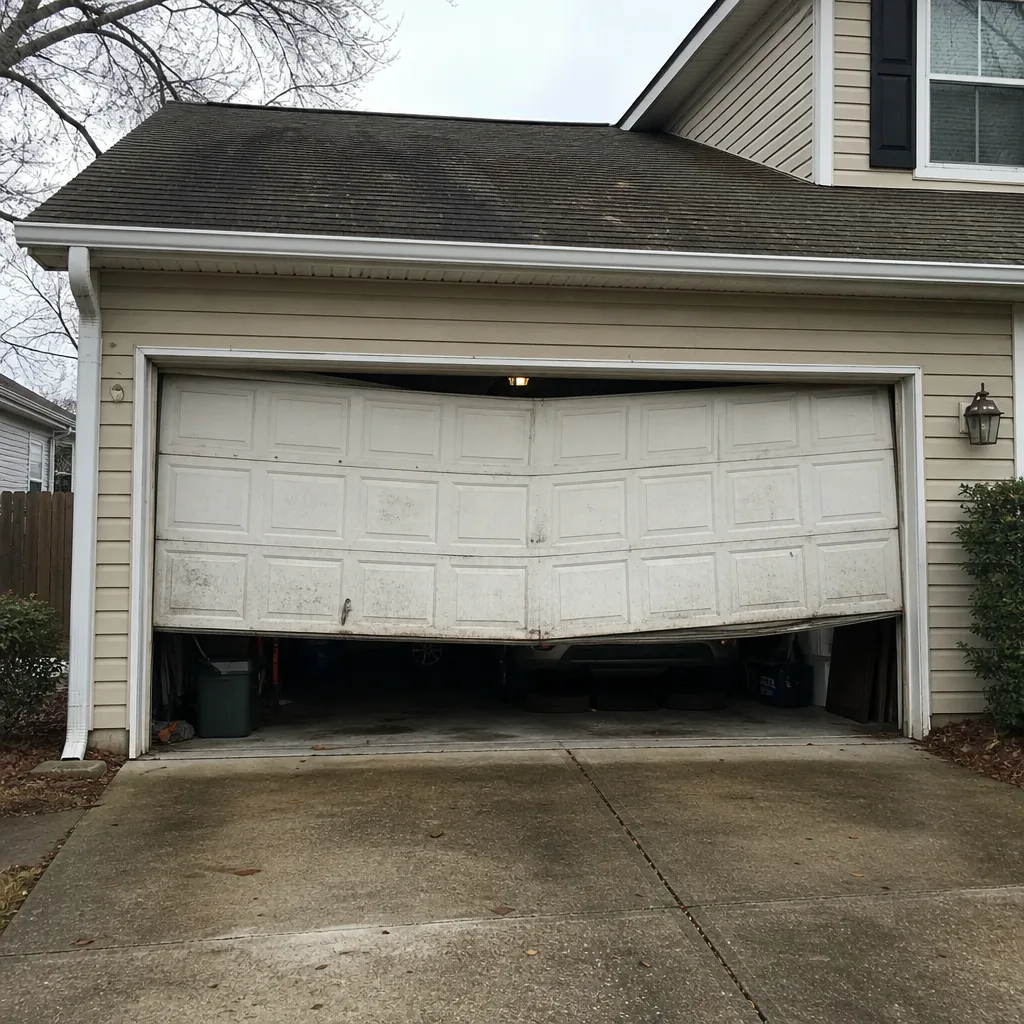 Before
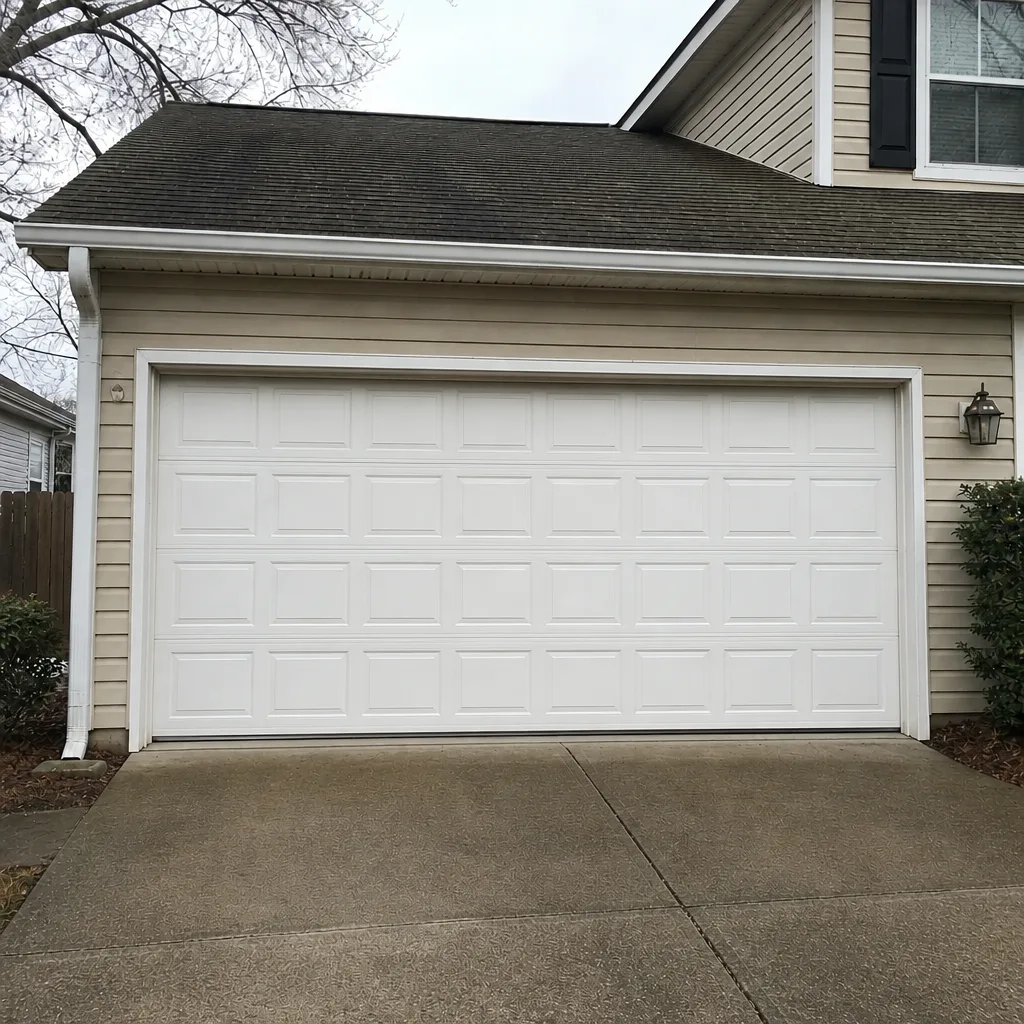 After
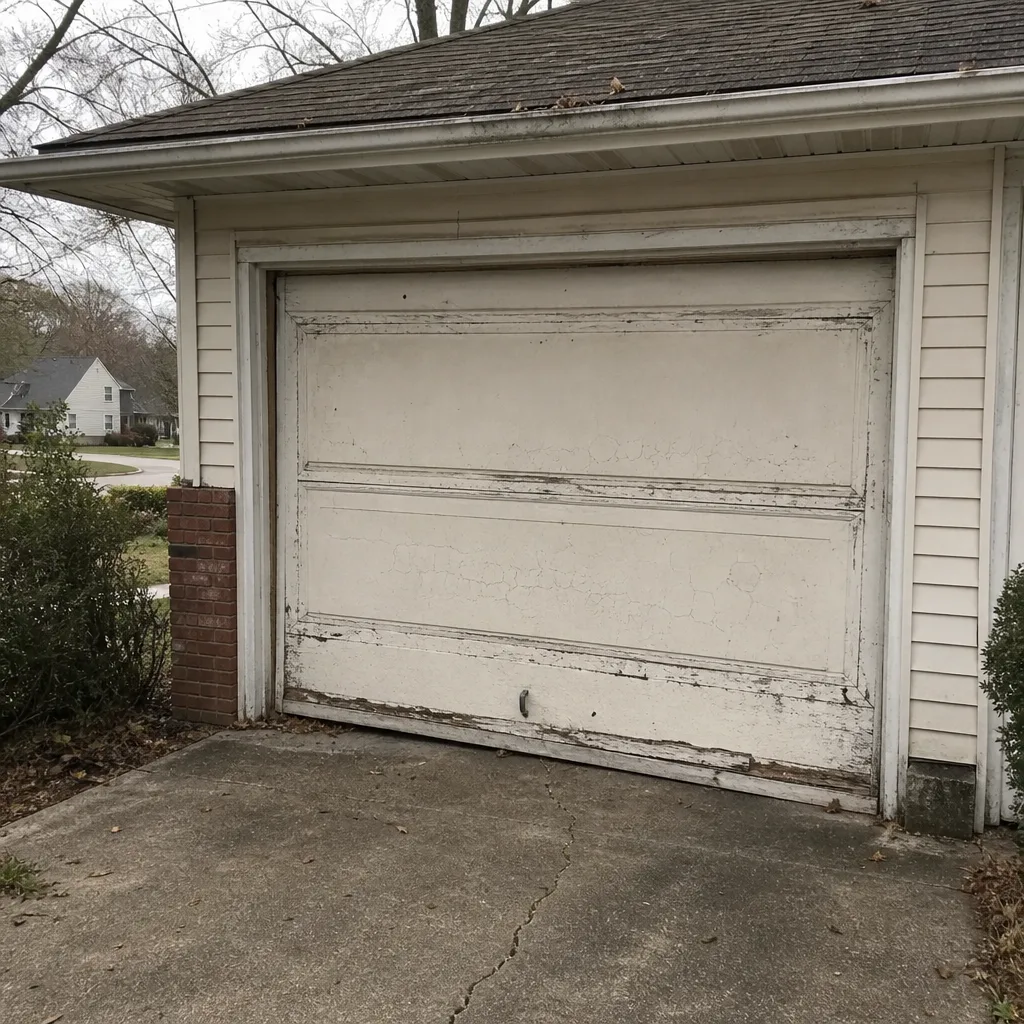 Before
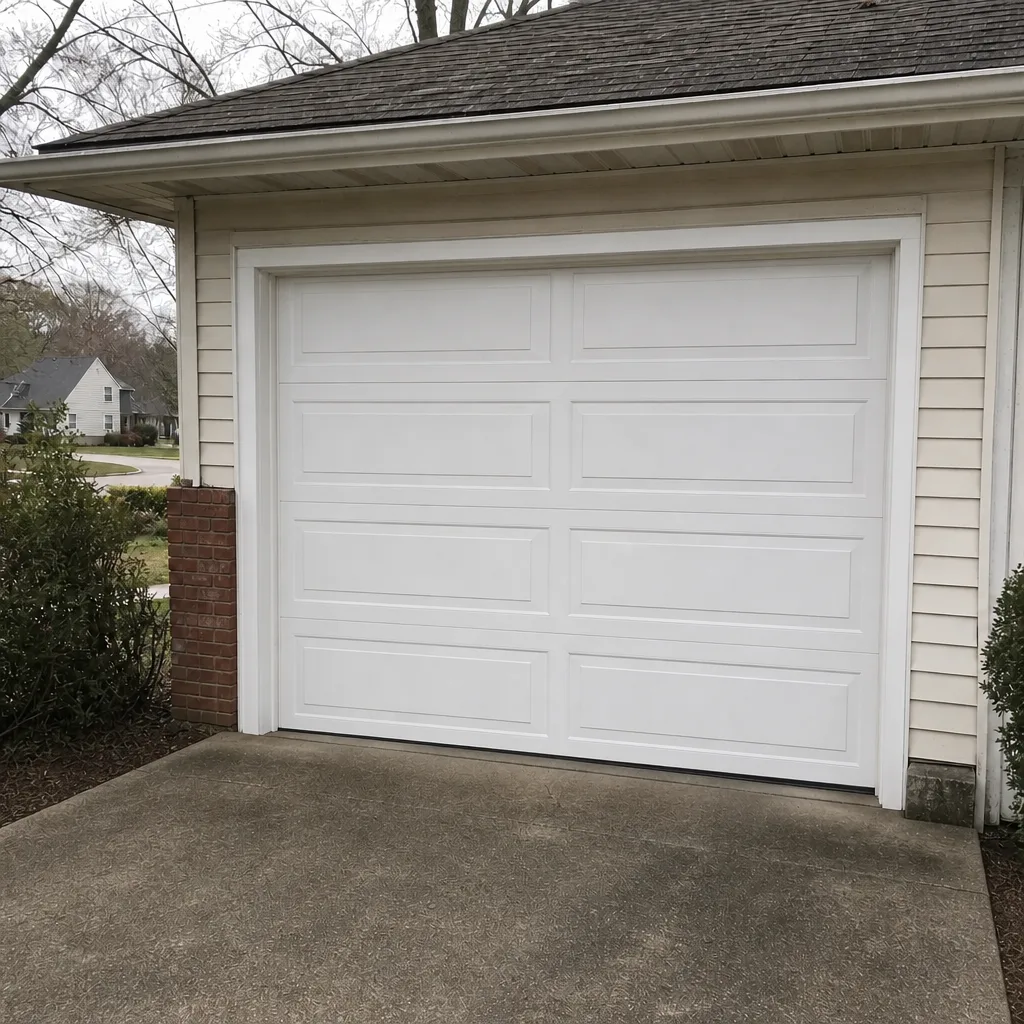 After
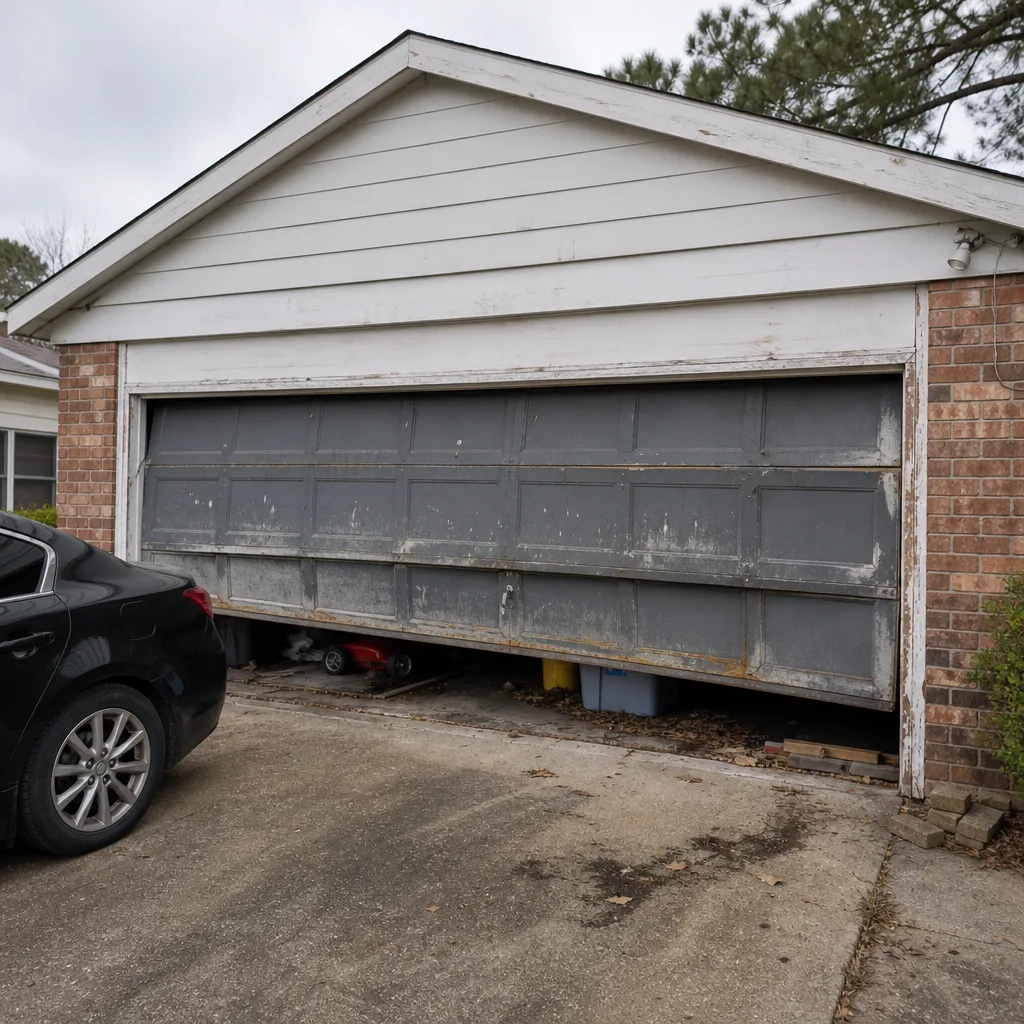 Before
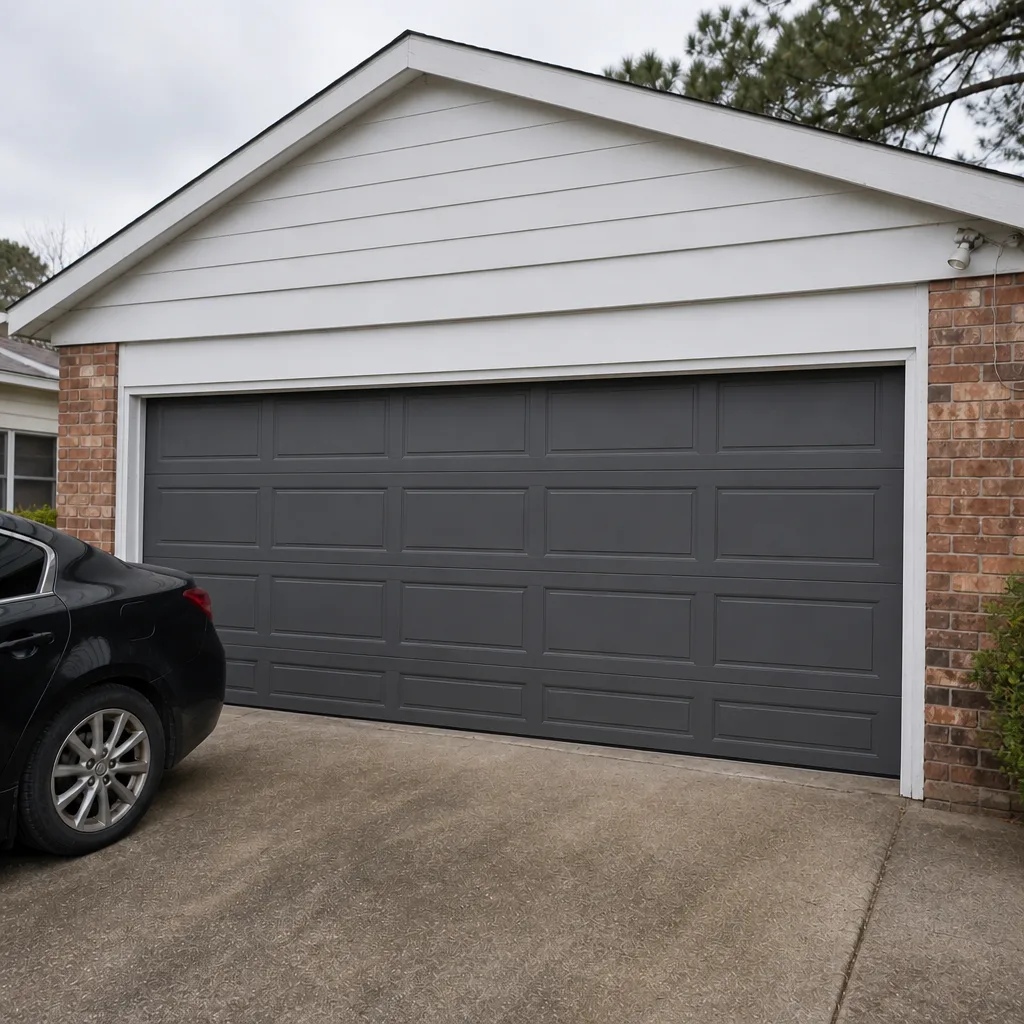 After
When to Call a Professional
Call a professional if you hear a loud bang and the door won’t lift; if the door moves unevenly or comes off its tracks; if a cable is visibly frayed, kinked, or slack; if the opener runs but the door doesn’t move; if the motor strains, grinds, or cycles repeatedly without lifting; or if the door has come down unexpectedly. Any spring, cable, cable drum, or bottom bracket work belongs with a trained technician, no exceptions. Those components are under load and a mistake can cause serious injury.
Loyal Garage Door Service offers free estimates in Charleston – call (855) 745-6192. Our technicians have up to 11 years of experience, and we work on the door hardware, the opener system, and new installations under one call. We work on what you already have, whether it’s a current LiftMaster or Chamberlain opener or an older Wayne Dalton or Craftsman system. We answer 24/7. Fast dispatch from 7am to 7pm, Sunday through Friday. The price is quoted and agreed before any work starts, and the written estimate is the price.
Frequently Asked Questions
No. Torsion springs are wound to hundreds of pounds of torque, and the winding process requires two proper winding bars, a controlled sequence, and a safe body position that a homeowner can’t set up without training. The stored energy releases in a fraction of a second if anything goes wrong, and that’s the mechanism behind most DIY garage door injuries. A trained technician is the right call for any spring work. Call (855) 745-6192 for an exact quote on spring replacement in Charleston – estimates are free.
Lubrication, weatherstripping, photo-eye sensor alignment, and remote or keypad programming are the four tasks we’re comfortable recommending to Charleston homeowners. All four are low-risk, don’t involve stored energy, and use standard household tools. Anything involving springs, cables, tracks, panels, or the opener’s internals is better handled by a technician.
Garage door repair in Charleston is priced per job, and the written estimate you receive is the price you’ll pay. We quote and agree on the price before any work starts, so there are no surprises at the invoice stage. Call (855) 745-6192 for a free estimate on your door.
For repair work in Charleston, same-day service is often possible. We answer 24/7, and a call outside dispatch hours is booked into the next opening, Sunday through Friday, 7am to 7pm. For installation or a full door replacement, the work is measured, ordered, and scheduled rather than dispatched same-day, and we’ll confirm the timing when we quote. Call (855) 745-6192 for the current availability on your job.
No. We quote the price before any work starts, and the written estimate is what you pay for the work described. If we find something additional while we’re on site, we’ll show you what we found and quote that separately before proceeding. Nothing gets added to your invoice without your agreement first. Call (855) 745-6192 for a free estimate.
Yes. Our technicians are insured & bonded and have up to 11 years of experience working on the eight brands we service, including Clopay, Amarr, Wayne Dalton, Genie, LiftMaster, Chamberlain, Craftsman, and Raynor. We only do garage door repair, opener repair, and installation, so the person at your door works on garage doors every day. Call (855) 745-6192 for a free estimate in Charleston.
Charleston’s humidity makes rubber seals crack and grow mold faster than in dry climates, speeds surface rust on hinges and rollers, and causes wooden or composite door panels to swell and stick. A fix that would hold for a year in a dry market sometimes lasts weeks here. That’s why weatherstripping and lubrication are worth doing more often in Charleston than the average garage door manual suggests.
The Bottom Line
The DIY-versus-professional question for garage doors is really a question about consequences. Lubrication, weatherstripping, sensor alignment, and remote programming are low-risk tasks that pay off in Charleston’s humidity when done regularly. Torsion springs, cables, cable drums, and bottom brackets are a different category entirely, with stored energy that leaves almost no room for error. Everything in between is usually worth a professional call, because the cost of a professional diagnosis is almost always less than the cost of a failed DIY attempt. If you’re not sure which category your job falls into, ask first. Call (855) 745-6192 for a free estimate. We answer 24/7. Fast dispatch from 7am to 7pm, Sunday through Friday. Loyal Garage Door Service works on what you already have, whether that’s a LiftMaster opener, a Genie or Craftsman unit, or a Wayne Dalton door. One call covers the door hardware and the opener system. Loyal to the job, and loyal to you.
Written by the team at Loyal Garage Door Service.