
Last updated November 15, 2026
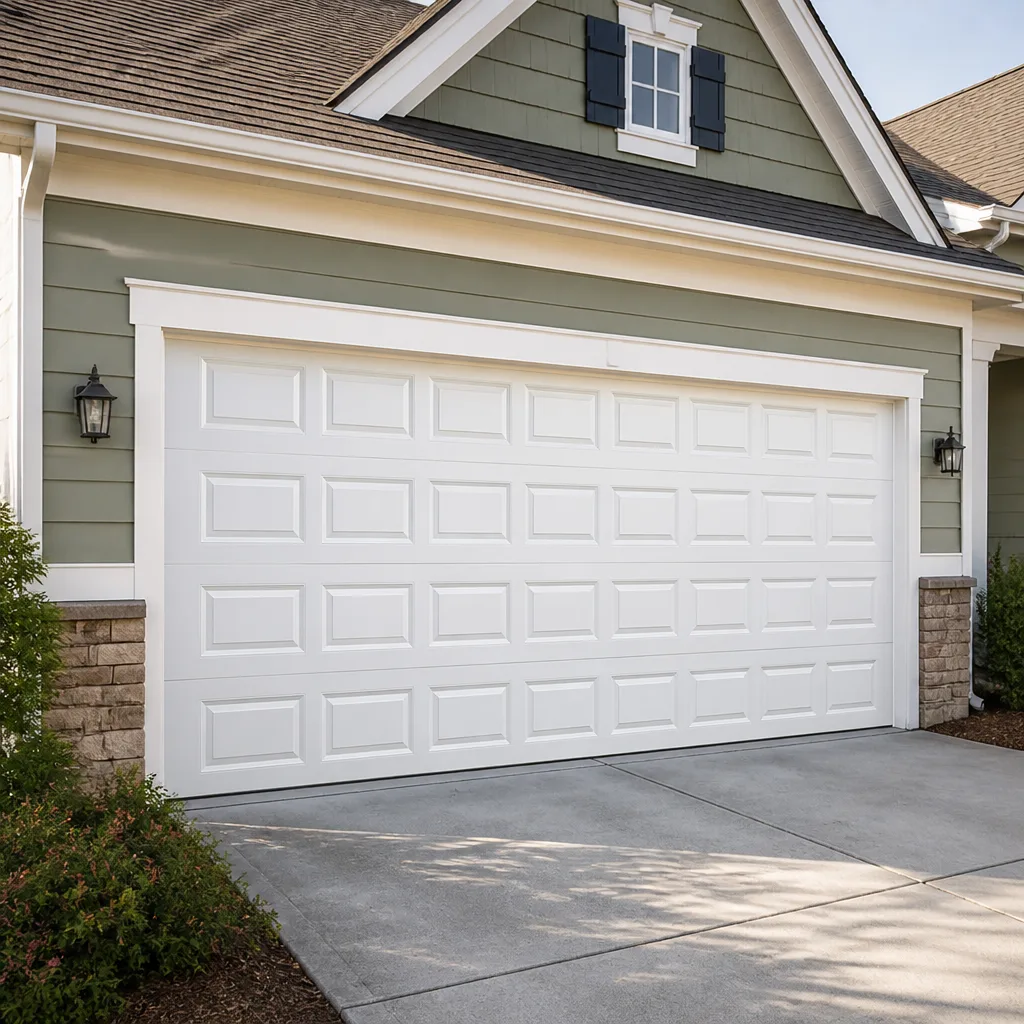 Raised-panel steel
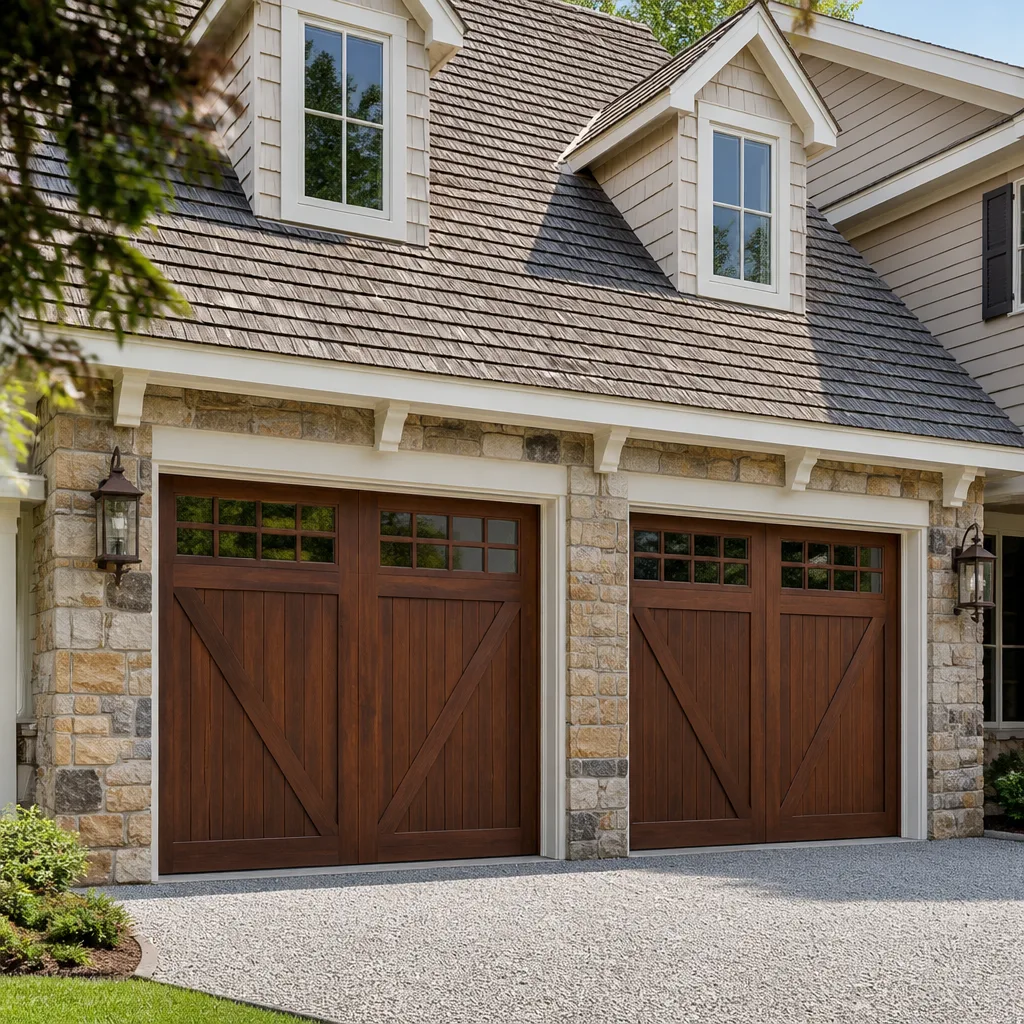 Carriage house
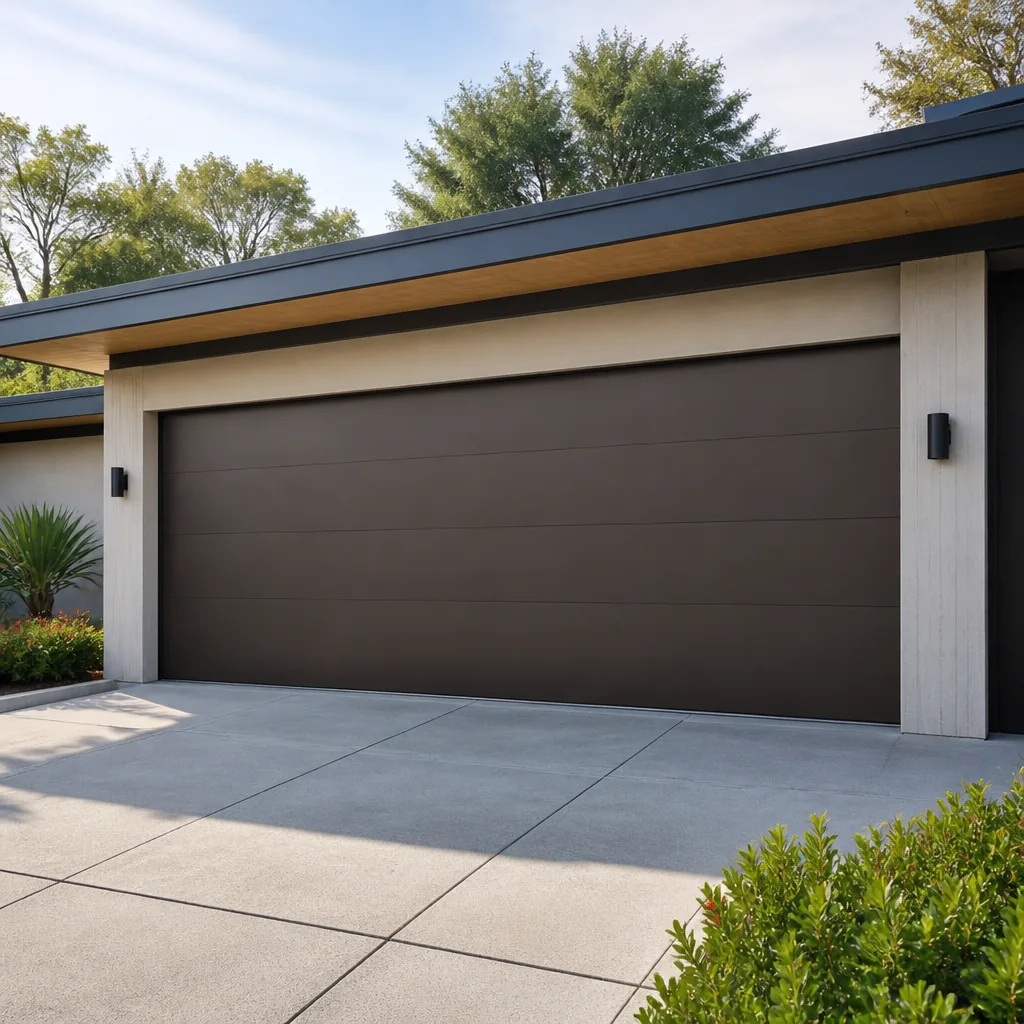 Modern flush
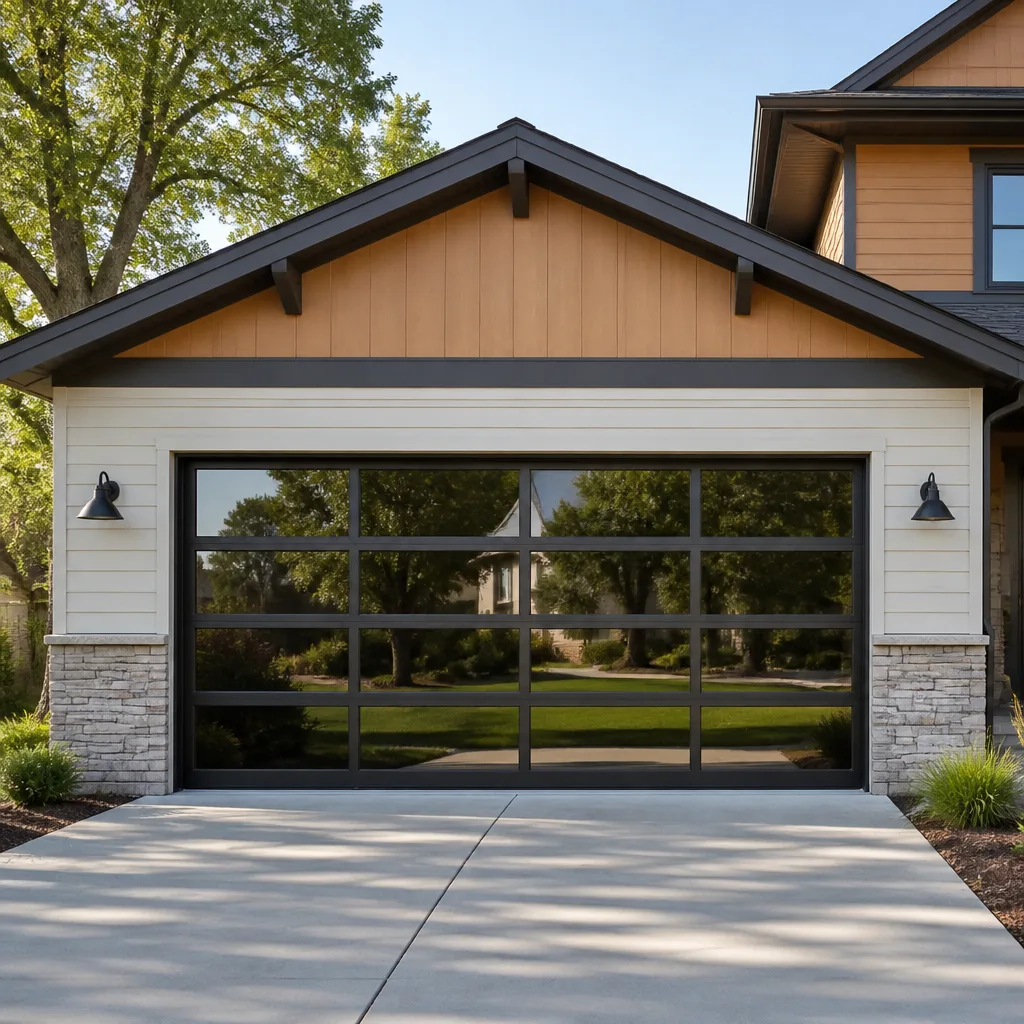 Full-view glass
 LiftMaster openers
 Chamberlain openers
Full 25-point door and opener safety check with every visit - springs, cables, rollers, tracks, and your LiftMaster or Chamberlain opener included
You get a price before we start. It does not change when the pro arrives.
Get your free estimateGarage Door Warning Signs: A Charleston Homeowner’s Reference Guide
The difference between a small repair and an expensive one is usually timing, not luck. Most garage door failures announce themselves weeks before they stop working. A roller starts to squeal, a cable frays, the door settles a little unevenly. Those early signals are easy to ignore because the door still opens and closes. Charleston’s humidity, summer heat, and shifting soil put extra stress on door hardware, so the clues show up earlier here than in drier climates. This guide explains what each sound and visual cue actually means, so you can walk into a repair conversation already knowing which component is talking. That short brief makes the whole visit faster and the diagnosis sharper.
Quick Answer
A garage door in Charleston shows warning signs long before it fails: grinding, popping, or squealing noises, rust streaking around roller brackets, a curled bottom seal, frayed cables, and a door that lifts unevenly or won’t stay balanced. Any sign of a snapped spring or a hanging cable means stop using the door and call a professional. Squeaks, slow movement, and mild vibration are usually safe to watch for a few weeks while you schedule service.
Styles & brands we work with
- Raised-panel steel
- Carriage house
- Modern flush
- Full-view glass
- LiftMaster openers
- Chamberlain openers
Table of Contents
- What the Sounds Mean: Grinding, Squealing, and Popping
- Visual Warning Signs in Charleston’s Climate
- How to Test if Your Door Is Unbalanced
- Signs That Mean Stop Using the Door Immediately
- Signs That Give You a Few Weeks to Schedule Service
- Opener Warning Signs: When the Motor Is the Problem
- How to Document Warning Signs Before Calling
- When to Call a Professional
What the Sounds Mean: Grinding, Squealing, and Popping
Noise is the most reliable early signal a garage door gives. Different sounds point to different parts, and telling them apart saves both time and money. In Charleston, where the summer heat and humidity work on metal and moving parts all year, sound is often the first clue a homeowner notices.
- Grinding usually means metal is scraping against metal. Worn rollers, dry hinges, or a track that’s gone slightly out of alignment all produce a low, rasping grind. A grind that starts only near the top of the door’s travel often points to a worn top roller or a bent top section.
- Squealing is friction. A high-pitched squeal on the way up or down commonly comes from dry rollers, dry torsion springs, or a hinge that’s lost its lubrication. Squealing is one of the easier issues to address before it escalates into worn hardware.
- Popping is the one to take seriously. A sharp pop during opening or closing can indicate a torsion spring that has snapped, a cable that’s jumped its drum, or a panel that’s binding. If a pop is followed by the door suddenly feeling much heavier or dropping slightly, stop and call a professional.
- Rattling or a loose knock often points to loose bolts on the track or hinges, or hardware that has worked its way loose over time.
We work on doors and openers every day, and the pattern holds with the brands we see most: a Craftsman or Wayne Dalton door that’s been squealing for a month tends to need rollers, while a LiftMaster opener that’s begun to grind often has a worn gear or a door that’s become too heavy for the motor. The sound tells you which way to look.
Visual Warning Signs in Charleston’s Climate
Some warning signs are visible before you ever hear them. Charleston’s warm, humid air and frequent moisture create a few patterns worth checking every few months. These are general observations about how doors in this climate tend to wear, not predictions about any one door.
- Rust streaking around roller brackets and hinges: Rust trails running from the brackets down the panel are a sign that moisture is sitting where it shouldn’t. Left alone, rust seizes rollers and hinges, turning a lubricated moving part into a stiff one.
- A curling or hardened bottom seal: The rubber seal along the bottom of the door takes the brunt of ground moisture. When it curls, cracks, or hardens, it stops sealing out damp air and pests, and it can drag on the floor and throw off the door’s balance.
- Frayed or rusted cables: Cables are under heavy tension and are one of the most dangerous parts of the system. Look for strands that look frayed, kinked, or rust-colored. Never handle a cable yourself. If you see one that looks compromised, stop using the door and call a professional.
- Bent or dented panels: A panel that’s out of shape can bind against the track and force the opener to work harder, which wears the motor sooner.
- Spots of daylight around the door: A gap at the edges or top usually means the door has settled or the seal has failed, letting humid air and water into the garage.
None of these signs is cause for panic, but all of them are worth photographing and mentioning when you call for garage door repair in Charleston.
How to Test if Your Door Is Unbalanced
An unbalanced door is the root cause of most premature opener motor failures we see. Here’s why. The opener isn’t designed to lift the door’s full weight. The springs do most of the lifting. When a spring weakens or the door goes out of balance, the motor takes up the slack, works harder every cycle, and wears out years before it should. A quick manual test tells you whether your door is balanced.
- Disconnect the opener. With the door in the closed position, pull the manual release cord to separate the door from the opener rail.
- Lift the door about halfway by hand, slowly and with a firm grip.
- Let go at the halfway point. A balanced door should stay put, roughly where you left it.
- Watch what happens. If the door slides down on its own, the springs are too weak. If it rises or feels very hard to lift, the tension is off. Either way, the door is out of balance.
- Reconnect the door carefully before doing anything else.
Don’t try to adjust the springs yourself to fix this. Torsion springs are under extreme tension and are genuinely dangerous to handle. If the balance test shows trouble, that’s a job for a trained technician. On any door, the point of the test is diagnosis, not repair.
Signs That Mean Stop Using the Door Immediately
A few warning signs aren’t “schedule it soon” signals. They mean the door should not be operated until it’s been looked at. A spring or cable under tension can fail suddenly, and a door that comes down on its own is dangerous. This isn’t a case where a little patience is safe.
- A snapped torsion spring. A visible gap in the coiled spring above the door is a clear sign. The door will feel extremely heavy, and the opener may not lift it at all. Do not keep cycling the opener.
- A hanging or frayed cable. If a cable is loose, kinked, or visibly frayed, stop. Cables can snap with force.
- The door won’t stay up, or drops on its own. If the door falls partway or fully when opened, it’s unsafe to use.
- The opener pulls the door unevenly or the door twists in the frame. This can mean a broken component or serious misalignment. Stop and call.
- A loud snap followed by the door going slack. Treat this as an emergency stop signal.
- Visible damage to the track or rollers that’s clearly fresh. If your kid backed the lawnmower into the track, don’t cycle the door until it’s been checked.
When something on this list happens, open and close the door by hand only if it’s safe to do so, or leave it as it is, and call. We answer 24/7. A call outside dispatch hours is booked into the next opening, Sunday through Friday, 7am to 7pm.
Signs That Give You a Few Weeks to Schedule Service
Not every warning sign is urgent. Some are perfectly safe to note and get looked at in a week or two. The trick is knowing the difference, so you don’t panic over a squeak or ignore a snap. Here’s the “schedule soon” list.
- A steady squeal or squeak. Dry rollers or hinges usually just need lubrication and possibly replacement. It’s rarely urgent.
- Mild vibration or a slightly bumpy ride. Worn rollers or a slightly loose hinge often cause this. Plan a repair within a few weeks.
- Slow or hesitant opening. An opener that’s a little sluggish might be a sign of a weakening motor or a door starting to bind. Worth a look, not an emergency.
- Rust streaks that aren’t yet causing sticking. Clean and lubricate, then have the brackets checked.
- A curling bottom seal that isn’t dragging yet. Schedule replacement before the seal starts catching on the floor.
- A remote or keypad that only works intermittently. Often a battery or signal issue on the opener. Not a safety concern, but worth fixing.
Catching these early is where the line between a small repair and a bigger one is drawn. A squealing roller caught in time stays a small job. The same roller left for months can wear a track and drag the whole door out of alignment. For problems on the opener side rather than the door itself, our garage door opener repair service covers the motor, sensors, and controls.
Opener Warning Signs: When the Motor Is the Problem
Not every problem lives in the door. The opener is a separate system with its own clues. These show up as behavior changes rather than sounds coming from the door itself.
- The door reverses right after it closes. Usually the safety sensors are blocked, misaligned, or dirty. This is the most common opener complaint.
- The opener runs but the door doesn’t move. The door may have been disconnected from the carriage or the drive system may have failed.
- The motor hums but nothing happens. This often points to a stripped gear or a door that’s become too heavy for the opener (a balance issue again).
- The door operates from the wall switch but not the remote. This is usually a remote, battery, or receiver issue.
- The opener runs constantly or won’t stop. A stuck limit switch or control board issue. Stop and call.
We service openers across the major brands, from a Craftsman opener that’s been running for years to a current LiftMaster or Chamberlain with smart-home control. Because we handle both the door and the opener, you don’t need to figure out which one is at fault. One call covers it, and the diagnosis sorts out the rest.
How to Document Warning Signs Before Calling
A few photos and notes before you call make the whole conversation faster and more accurate. The technician arrives already knowing roughly where to look. You don’t need to be an expert to do this. You just need a phone and a couple of minutes.
- Photograph the whole door from inside the garage. A straight-on shot shows alignment, sagging panels, and uneven gaps at the sides.
- Shoot close-ups of any rust, a curled bottom seal, or frayed cable. Get a few angles if it’s hard to see.
- Write down the sound in words. “Grinds near the top,” “pops once when it starts,” “squeals the whole way up.” Plain descriptions help more than guesses.
- Note when the problem happens. On opening, closing, or both? Only in the morning, or all day? Does it change with the weather?
- Jot down the manufacturer if you can see it. A brand and a rough model on the opener help us bring the right approach. Wayne Dalton, Raynor, and other brands all have their own quirks.
- Note anything that changed recently. New weatherstripping, a bump to the track, a power flicker, a new remote.
Bring that to the phone call and the diagnosis starts before anyone gets in a vehicle. It also helps you get an accurate estimate, because you’ll know what you’re describing and what you’re asking about.
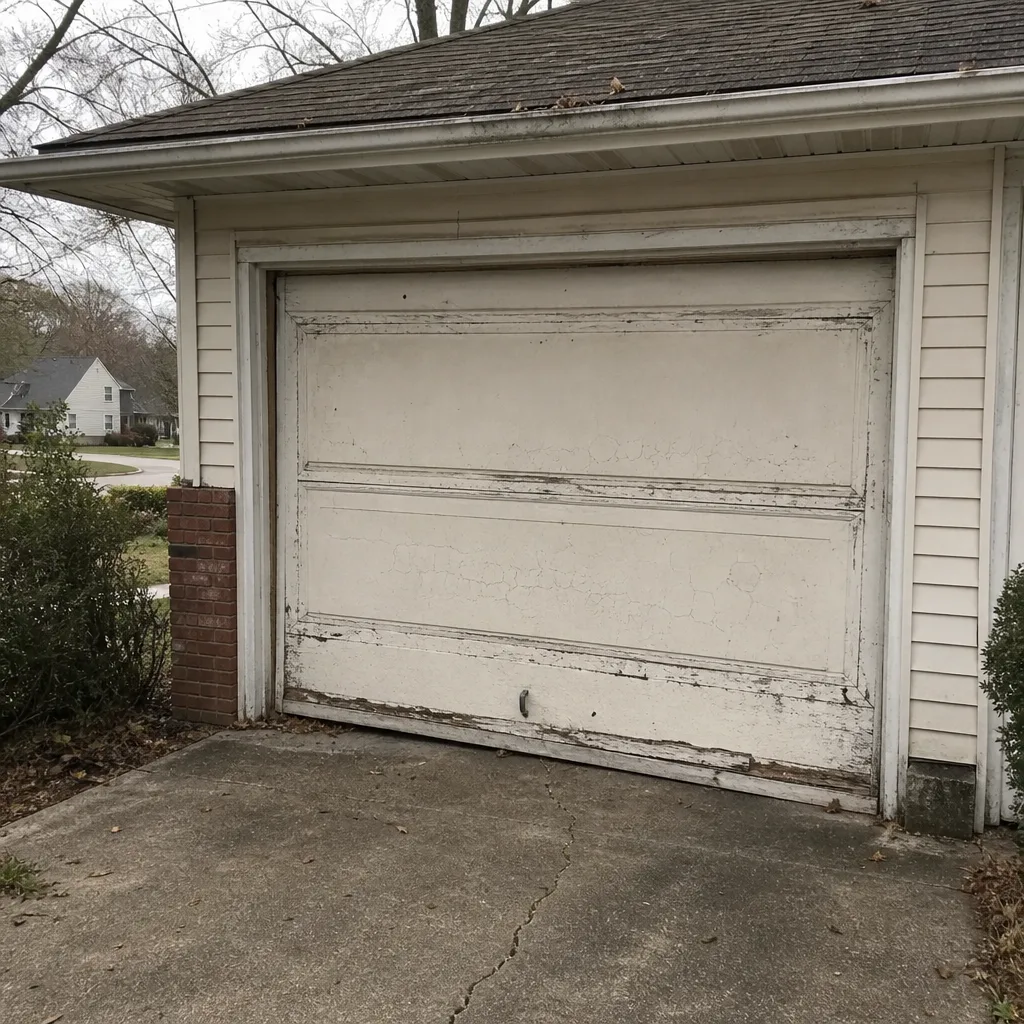
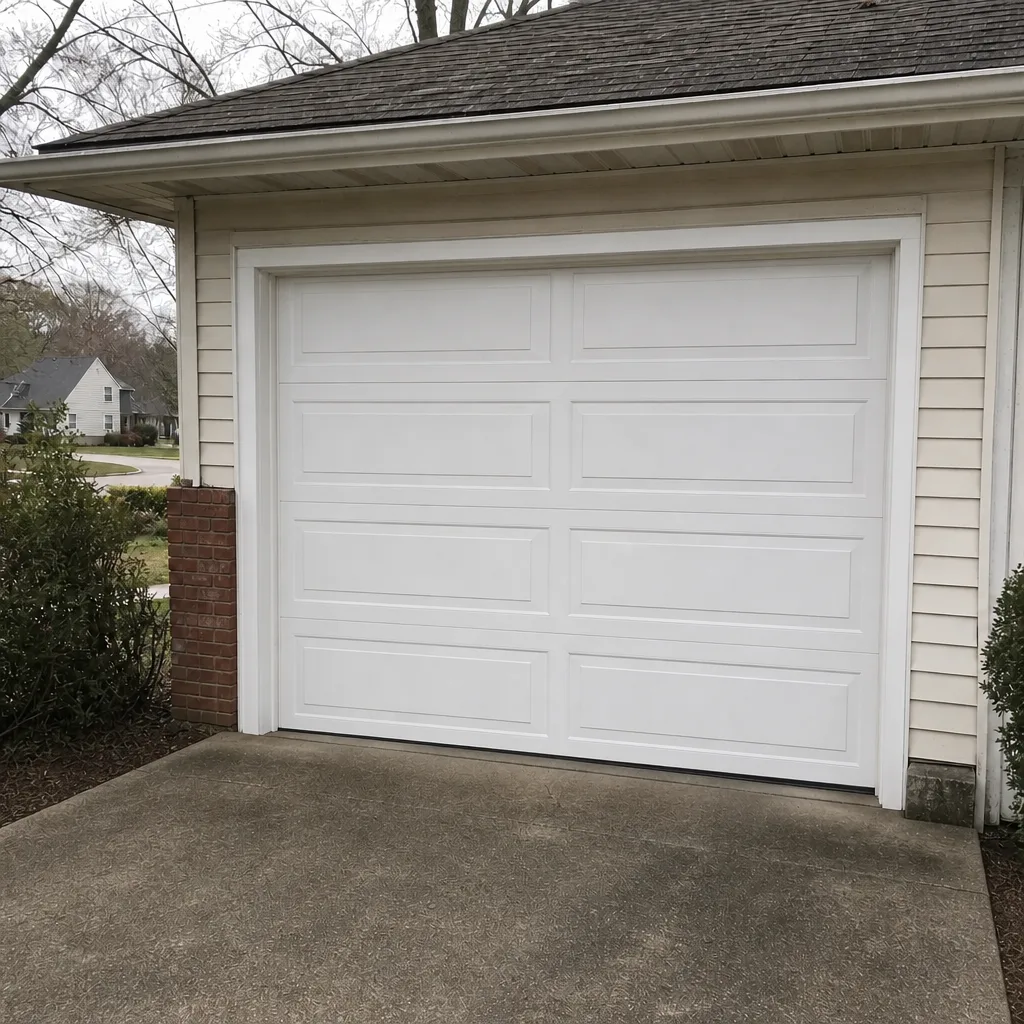
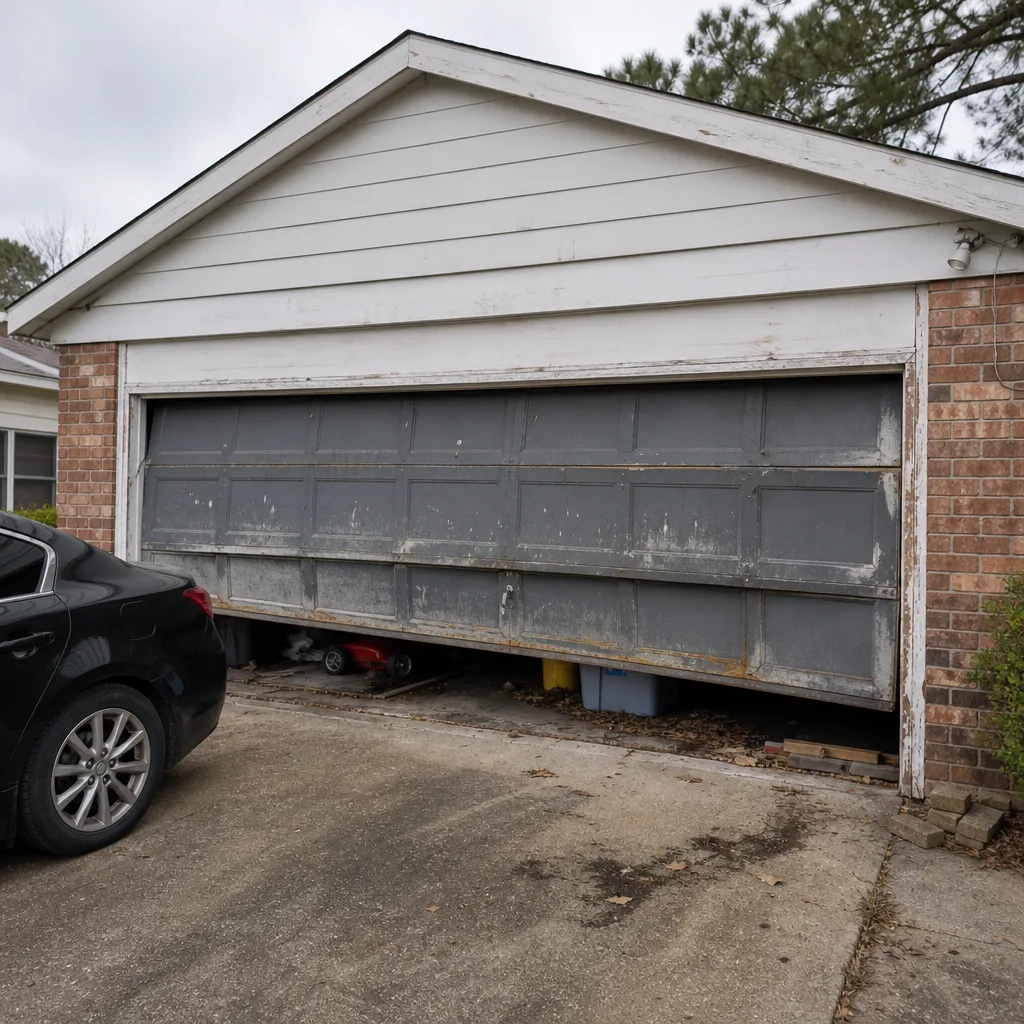
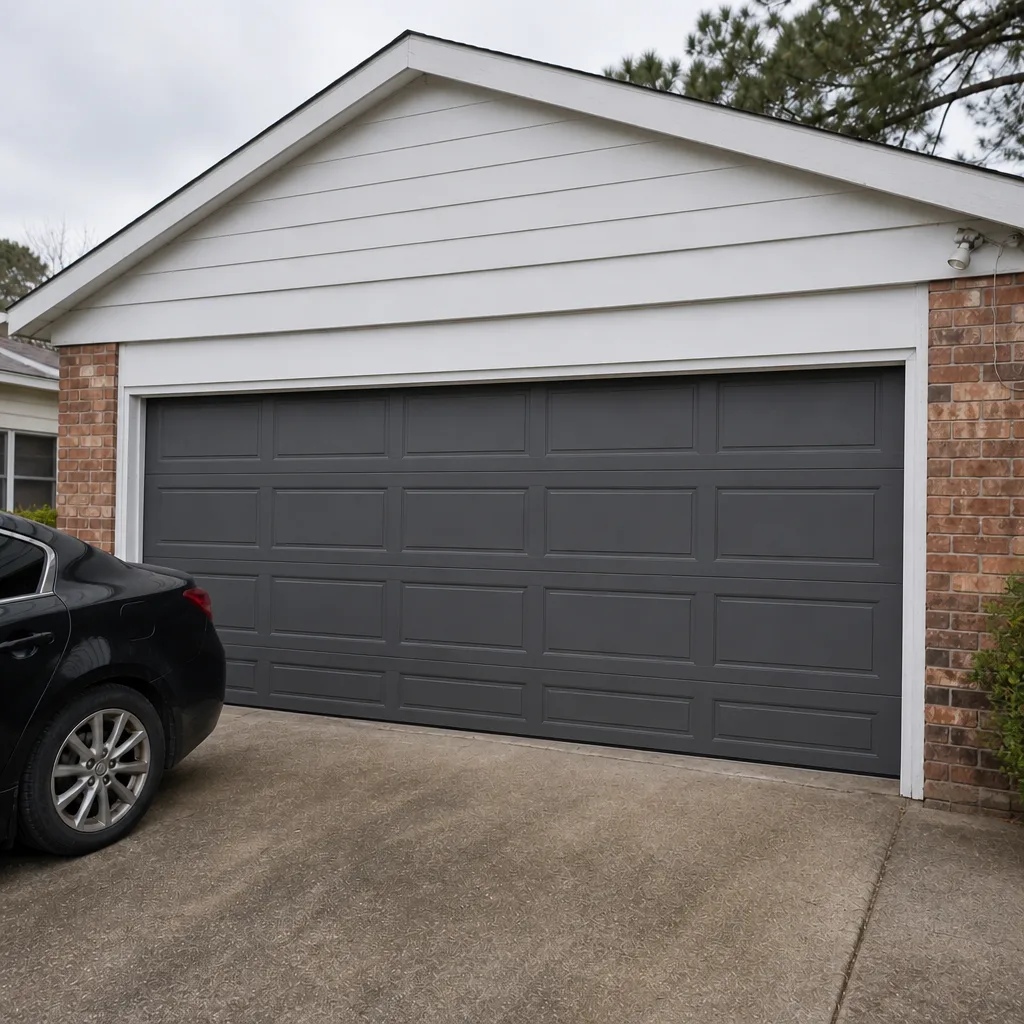
See the difference
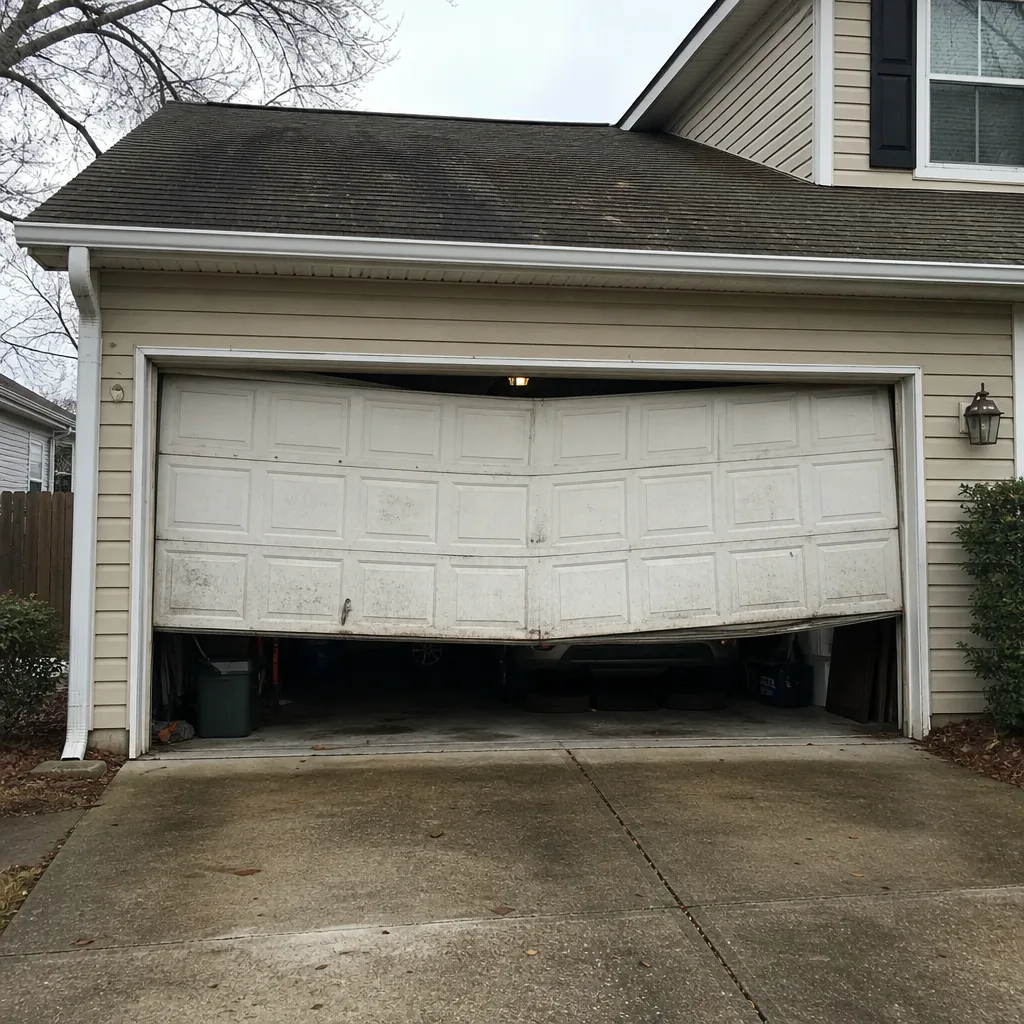 Before
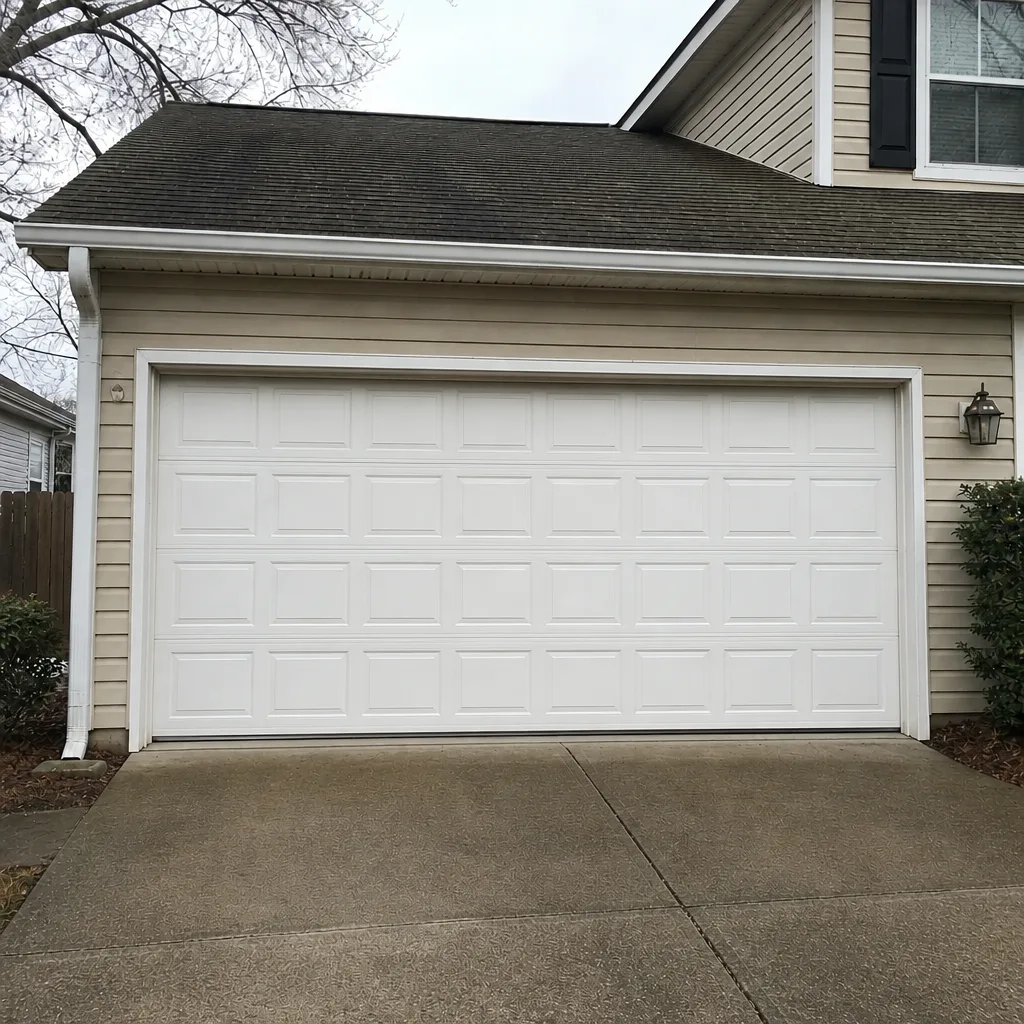 After
 Before
 After
 Before
 After
Common Mistakes to Avoid
- Ignoring a small squeak for months. A dry roller is cheap and quick to address. Left alone, it wears the track and forces expensive realignment work in Charleston’s humid air.
- Trying to lubricate or adjust a torsion spring yourself. Springs are under extreme tension and are genuinely dangerous. This is a job for a trained professional, every time.
- Replacing the opener when the door is the problem. A new opener put on an unbalanced or heavy door will fail too. Test the door’s balance before blaming the motor.
- Pressing the remote over and over when the door won’t open. If the door is binding or a spring has failed, repeated cycling puts more strain on the opener and can damage it.
- Assuming a gap or a curled seal is only cosmetic. In Charleston’s climate, a failed seal lets in humidity and pests and can make the door drag on the floor.
- Hiring a general handyman for a spring or cable job. A garage door specialist works on these systems daily and knows how to handle the tension safely. It’s a focused trade for a reason.
- Describing “a noise” without the detail. “It grinds when it opens” tells your technician far more than “it makes a noise.” Say what, where, and when.
When to Call a Professional
Call a professional any time the door is on the “stop using it” list above. A snapped spring, a frayed or hanging cable, or a door that drops on its own should be checked before the next cycle. Any time you’re unsure where a sound or a wobble is coming from, a trained technician can tell you in minutes. And any time you’re facing a spring or cable issue, it’s worth having someone who does this daily. Loyal Garage Door Service offers free estimates in Charleston. Call (855) 745-6192. We answer 24/7. Fast dispatch from 7am to 7pm, Sunday through Friday.
Frequently Asked Questions
The most common are grinding, squealing, or popping noises, a door that opens unevenly, jittery movement, rust streaks around moving parts, a curled bottom seal, and a door that won’t stay balanced. Squealing usually means dry hardware. Popping or a heavy-feeling door often means a spring or cable issue. Call (855) 745-6192 for a free estimate if you’re unsure what a particular sound means.
A broken torsion spring shows as a visible gap in the coiled spring above the door, and the door suddenly feels extremely heavy or won’t open. If you suspect a broken spring, stop using the door and call a professional. Do not try to lift or fix it yourself. Call (855) 745-6192. We answer 24/7. Fast dispatch from 7am to 7pm, Sunday through Friday.
Grinding usually means metal is rubbing against metal. That can come from worn rollers, dry or stiff hinges, or a track that’s gone slightly out of alignment. A grind that starts near the top of travel often points to a top roller or a bent top section. It’s worth a look before it wears harder parts. Call (855) 745-6192 for a free estimate.
Lubricating rollers and hinges is safe for most homeowners. Anything involving springs, cables, or panel alignment should go to a professional. Those parts are under heavy tension and can cause serious injury if handled wrong. If you’re not sure whether something is a spring or cable issue, don’t guess. Call (855) 745-6192.
Do the manual balance test: disconnect the opener and see if the door stays put at the halfway point. If it slides down, the door’s springs are the issue. If the door is balanced but the opener still struggles, the motor is likely the problem. Either way, a technician can tell you on-site. Loyal Garage Door Service handles both the door and the opener. Call (855) 745-6192.
Rust streaks and a curling seal are common here. Clean and lubricate the hardware and have the brackets checked to make sure nothing has seized. A curled bottom seal should be replaced before it starts dragging on the floor. Book a free estimate with Charleston‘s garage door specialist by calling (855) 745-6192.
The Bottom Line
Most garage door failures give you weeks of warning. The trick is knowing which sounds and visual cues are the urgent ones. Squealing, slow movement, rust streaks, and a curled seal are usually safe to note and schedule. Grinding near the top of travel and popping are worth a closer look. A snapped spring, a frayed cable, or a door that won’t stay up mean stop. Photograph what you see and write down what you hear. Whether you have a Wayne Dalton or Raynor on one side of your house or a newer Chamberlain on the other, those details turn a stressful call into a quick, accurate one. Loyal Garage Door Service handles the door, the opener, and installation under one company, so the call is straightforward. Call (855) 745-6192 for a free estimate from the Loyal Garage Door Service team.
Written by the team at Loyal Garage Door Service.