
Last updated November 15, 2026
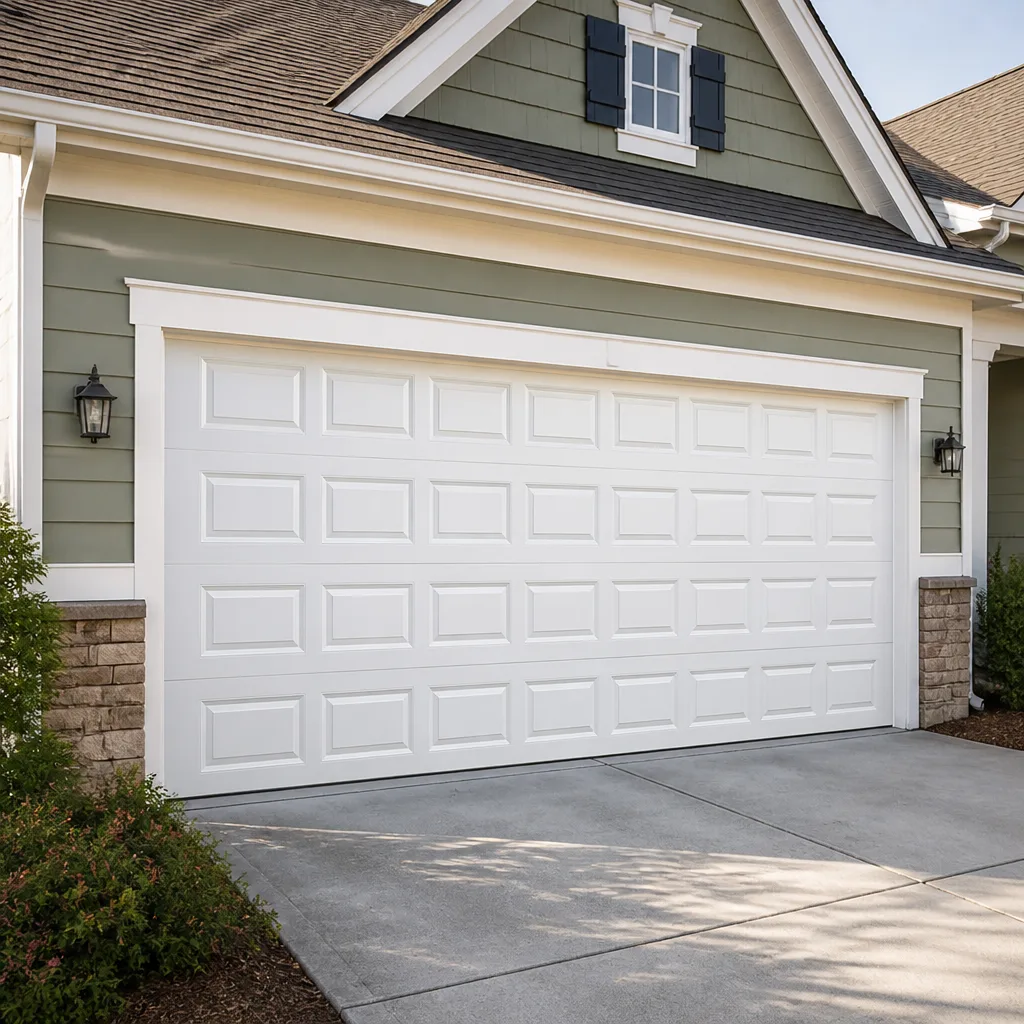 Raised-panel steel
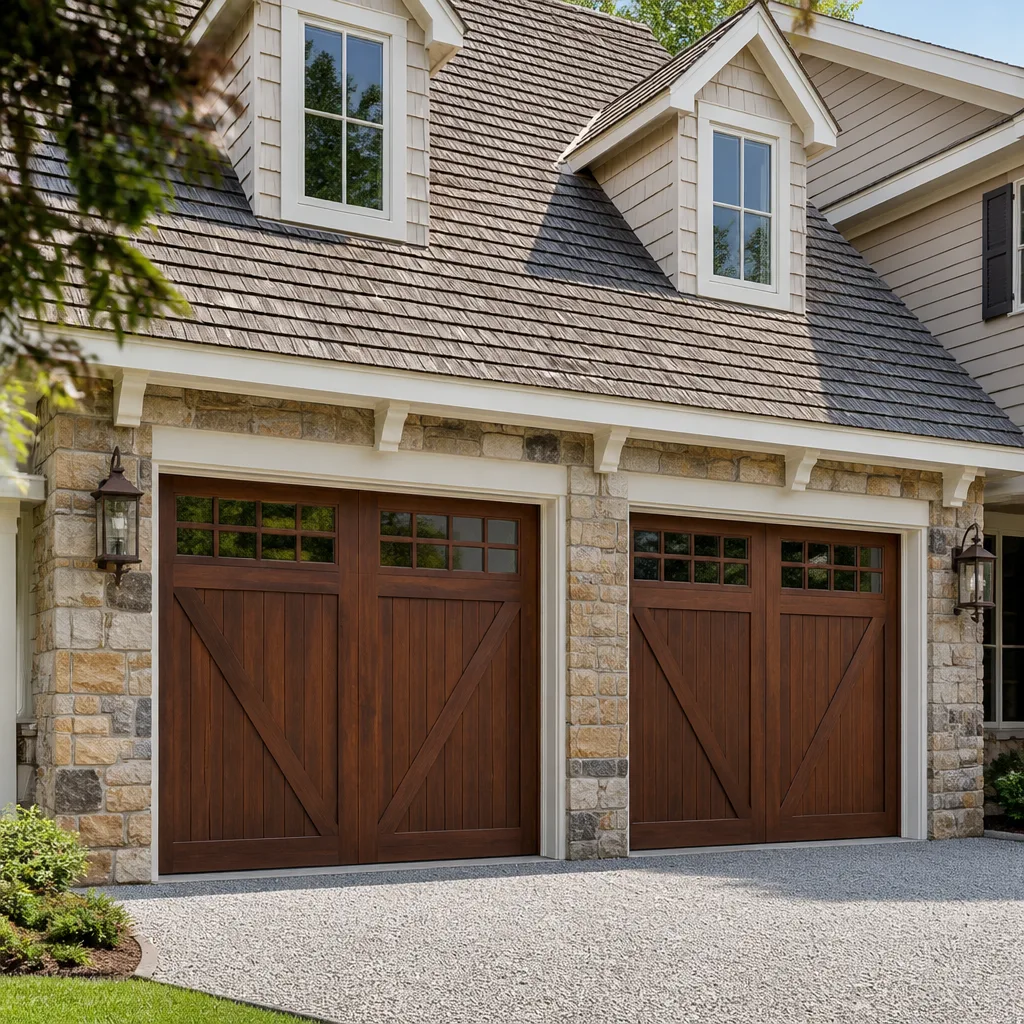 Carriage house
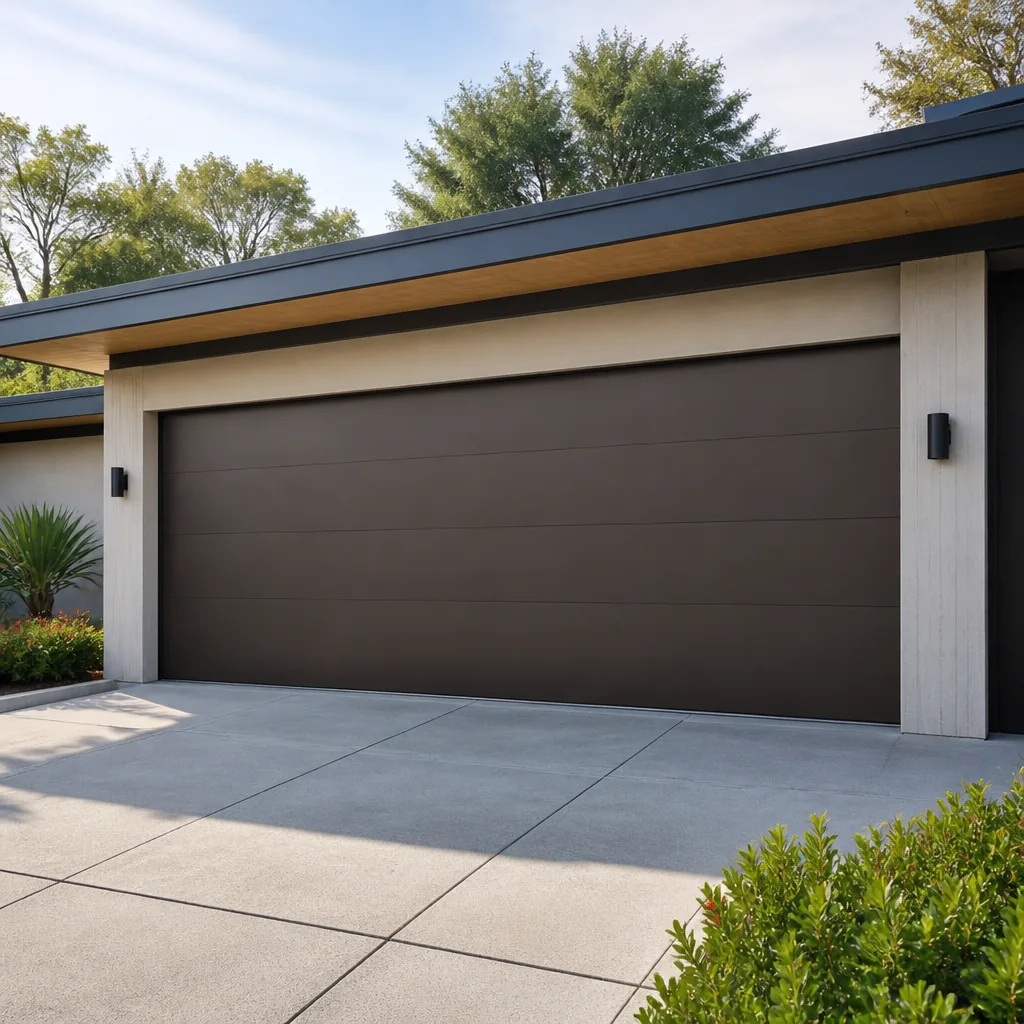 Modern flush
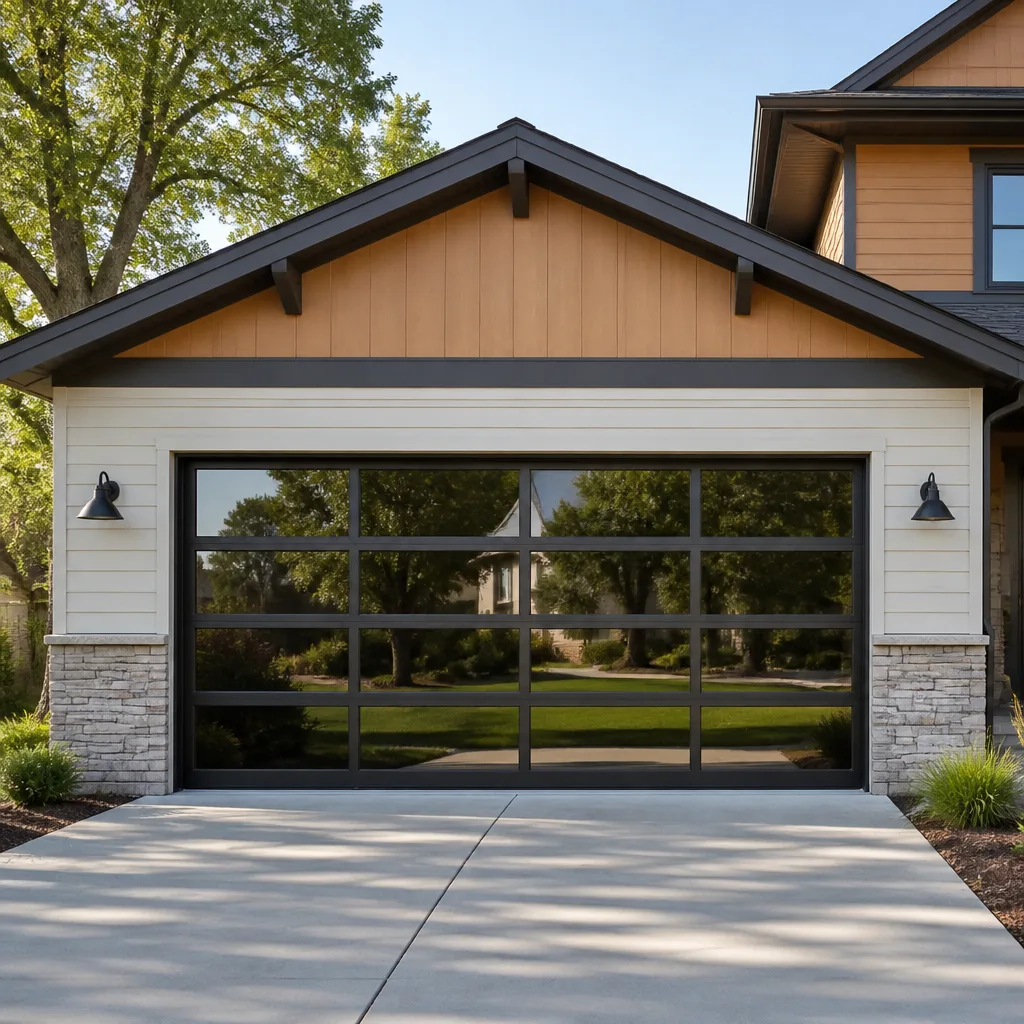 Full-view glass
 LiftMaster openers
 Chamberlain openers
Full 25-point door and opener safety check with every visit - springs, cables, rollers, tracks, and your LiftMaster or Chamberlain opener included
You get a price before we start. It does not change when the pro arrives.
Get your free estimateHow to Hire a Garage Door Contractor in Charleston: A Step-by-Step Guide
Most hiring guides hand you the same advice: get three quotes, read reviews, check references. That advice is fine as far as it goes, but it skips the harder question. In Charleston, a meaningful share of the businesses that turn up in a search for garage door work are either a single person with a small parts inventory or a home services platform that subcontracts the job to whoever is free that day. Neither one is easy to spot from a listing. What you actually need is the ability to tell a focused garage door specialist from a generalist before anyone knocks on your door. This guide walks through South Carolina licensing and insurance, brand coverage, local red flags, the pre-visit conversation, and what a written estimate should say. By the end, you’ll know exactly which questions to ask and what a straight answer sounds like.
Quick Answer
To hire a garage door contractor in Charleston, verify South Carolina licensing and insurance before booking, confirm the company covers both your door hardware and your opener brand, ask for a written estimate that separates labor from parts, and never accept a diagnosis given without anyone physically inspecting the door. A focused specialist will tell you what’s wrong and why before touching anything; a generalist will guess and replace.
Styles & brands we work with
- Raised-panel steel
- Carriage house
- Modern flush
- Full-view glass
- LiftMaster openers
- Chamberlain openers
Table of Contents
- Specialist or Generalist? How to Tell Them Apart
- South Carolina Licensing and Insurance: What to Verify
- Why Brand Coverage Matters More Than You Think
- Red Flags Specific to the Charleston Market
- The Call Before the Visit: What a Good Contractor Tells You Upfront
- What a Written Estimate in South Carolina Should Include
- How to Compare Two Quotes Apples to Apples
- Common Mistakes to Avoid
Specialist or Generalist? How to Tell Them Apart
A garage door specialist does garage doors. That is the whole job. A generalist handyman or home services platform handles garage doors among dozens of other things: decks, gutters, appliance installs, drywall. On the surface both can fix a crooked panel or a door that stops halfway. The difference shows up when the diagnosis has to be precise.
A garage door system has two halves that fail in different ways. The door itself (panels, springs, cables, hinges, rollers, tracks) is mechanical. The opener is an operator system with its own logic board, sensors, travel limits and force settings. The two interact constantly, and a problem in one half can look exactly like a problem in the other. A door that reverses on the way down might be a bad sensor, a misadjusted travel limit, or a worn spring that no longer has the force to hold the door up. Telling those apart takes someone who works on both halves routinely.
Generalists tend to solve the two halves with one tool: replacement. If the opener is old and the door is stiff, swapping the whole thing clears the symptom without anyone diagnosing it. A specialist repairs first and replaces only when repair won’t hold. That difference alone can decide whether you spend a small amount on a repair or a large amount on a new system.
Here’s what to watch for in the first two minutes of a conversation:
- Do they ask what brand you have? A specialist wants to know. A generalist doesn’t care because they’ll replace it either way.
- Can they describe how a torsion spring and an extension spring differ? If they can’t, they don’t work on doors often enough to diagnose yours.
- Do they quote before inspecting? Any number given over the phone on an unseen door is a guess.
- Do they mention other home services? If the same company also cleans gutters and hangs drywall, the garage door is a side job.
Charleston’s housing stock makes this matter. Older homes in neighborhoods like Wagener Terrace and Hampton Park often have mix-and-match systems: a door from one era and an opener added years later. A contractor who only handles one brand or one half of the system will push you toward whatever they carry rather than what your setup actually needs.
South Carolina Licensing and Insurance: What to Verify
South Carolina requires contractors to hold a license for the work they perform, and the license class depends on the scope and value of the project. Garage door installation and repair generally falls under residential specialty or general contractor licensing, depending on the job. Specialty trades have their own classifications, and a contractor operating outside their classification is a real problem.
Here’s how to verify before you book anything:
- Ask for the license number and classification. A legitimate contractor knows it without looking it up.
- Look it up yourself. The South Carolina Department of Labor, Licensing and Regulation maintains a public license lookup. Enter the number and confirm the name and class match what you were told.
- Confirm the classification covers garage door work. A license that covers plumbing doesn’t cover door installation. Ask which classification applies and verify it.
- Ask for a certificate of insurance. This should show general liability coverage at minimum, and workers’ compensation if anyone is on your property. A certificate is not the same as a promise; get the document.
- Call the insurer if you want certainty. A certificate can be forged. If someone is going to be working overhead on a heavy door, a quick call to the listed insurer is reasonable due diligence.
Insurance matters more on this trade than on most. A garage door weighs a lot, and a home has everything underneath it. If an uninsured contractor damages your door, your car, or themselves, you may end up in the middle of it.
Be specific about what you want to see. “We’re licensed and insured” said over the phone is not verification. “Here’s our license number and here’s a certificate of insurance issued to your address” is. Our technicians are state-licensed, insured and bonded, and we can produce those documents before any work is scheduled. A contractor who hesitates on this question is telling you something.
Why Brand Coverage Matters More Than You Think
A shop that only services one opener brand will steer every diagnosis toward what they sell. This isn’t necessarily dishonest. It’s how a single-brand dealer is set up. They have parts for their line, training for their line, and a sales incentive tied to their line. When your Genie opener needs a new travel limit board and the shop only stocks LiftMaster, you’ll get a quote for a new opener instead of the board.
The brands installed across Charleston’s homes are a wide mix. LiftMaster and Chamberlain are everywhere, Genie and Craftsman are common in older installs, and doors from Clopay, Amarr, Wayne Dalton and Raynor show up often. Wayne Dalton and Craftsman in particular get passed over by contractors who don’t want to work on legacy systems. Craftsman openers especially are frequently treated as “just replace it” because parts aren’t universally stocked.
What to ask:
- Which opener brands do you service? Get specific names, not “all brands.”
- Which door brands do you install and repair? Separate question. Door panels and operator systems are different product lines.
- Can you service a Wayne Dalton or Craftsman system? This is the test question. A shop without those capabilities will deflect or quote a full replacement.
- Do you work on older openers, or only current models? A shop that only handles current smart-home systems will decline older jobs.
We work on what you already have. That’s the whole point of being brand-agnostic. Our technicians are trained across eight major brands: LiftMaster, Chamberlain, Genie, Clopay, Amarr, Wayne Dalton, Craftsman, and Raynor. That covers both legacy systems and current smart-home units like LiftMaster and Chamberlain myQ. It means we aren’t guessing when we arrive, and it means a Wayne Dalton or Craftsman owner isn’t turned away. If you want a company that will look at your door and opener as they are, Loyal Garage Door Service handles both halves under one call.
Red Flags Specific to the Charleston Market
The volume of home services listings in Charleston has grown faster than the number of actual garage door shops. That gap is where problems live. Here are the signals that should make you slow down:
- No local address. Not every business needs a storefront, but a garage door company that can’t tell you where it operates from is likely subcontracting. That’s not automatically bad, but you need to know who is coming to your house and who holds the liability if something breaks.
- No same-day parts availability. Springs, cables, rollers and hinges are the most common fixes. A shop that has to order a standard spring and come back next week isn’t carrying what it needs. Ask directly: “If it’s a broken spring, do you have the replacement on hand?”
- Quotes given without looking at the door. Springs, cables, opener boards and track alignment all have to be seen. A number given over the phone on an unseen door is a placeholder that will move once someone shows up. That’s not a quote; it’s a hook.
- Pressure toward replacement on a repair-sized problem. If the door is functional aside from a broken part, and the first offer is a full replacement, ask why. The answer should be specific: the panel is no longer available, the opener board is discontinued, the tracks are bent beyond realignment. If it’s vague, push back.
- No written estimate before work starts. Verbal pricing is normal in a lot of trades. It’s not normal on a job where the parts bill can double the labor.
- A different person at the door than the person you talked to, with no explanation. If the company subcontracts, they should tell you that before booking, not at the door.
Charleston’s humid summers and storm season put real wear on doors and openers. Springs fatigue faster in heat, tracks move with the foundation, and openers take a beating from frequent cycles. That means repair frequency here isn’t unusual, and a company that treats every repair as a lead-in to a replacement is missing the market’s actual pattern.
The Call Before the Visit: What a Good Contractor Tells You Upfront
The conversation before anyone shows up is where you learn the most. A good contractor will tell you these things without being asked. If you have to pull them out, that’s information too.
- What the visit will involve. They should describe what they’ll look at: the springs, the cables, the track, the hinges, the opener board, the safety sensors, the force settings. That list tells you whether they’re thinking about both halves of the system or just one.
- What the pricing structure is. Repair jobs are typically quoted per job after a written estimate. There’s no honest way to give a firm number before looking at the door, and a good contractor will say so plainly.
- Whether the estimate is free. Ours is. Free estimates mean you can get a real number without committing to the work. If there’s a fee, they should say what it is and whether it’s credited toward the job.
- Whether they carry the parts for the likely fix. Ask “if it’s a spring, do you have it on the truck?” Ask the same for rollers, hinges, and opener boards. The answers tell you how the shop is set up.
- What brands they service. Same question as above, but ask it on the phone. Listen for specific names.
- Whether the estimate is written. Confirm you’ll get the pricing and scope in writing before work starts. Any contractor who pushes back on this is a problem.
A word on urgency. If your door is stuck open or the opener is cycling without moving the door, speed matters, and same-day service is reasonable to ask for. When it’s a repair issue, ask directly: “Can you come today?” A focused shop will know its schedule. When the job is a new door or full replacement, the timing changes because the door needs to be measured, ordered and scheduled. Nobody should promise same-day on a replacement; if they do, they’re either carrying an odd inventory or overselling.
For doors that won’t close, won’t open, or are making noise they didn’t used to make, garage door repair is the right call. For openers that lose their settings, reverse on their own, or won’t respond to the remote, it’s an opener problem and needs garage door opener repair. Knowing which half of the system you’re dealing with before you call helps the conversation go faster.
What a Written Estimate in South Carolina Should Include
A written estimate is what protects you from an invoice that doesn’t match what you agreed to. In South Carolina, as in most states, consumer protection rules favor the written agreement. A proper garage door estimate should include all of the following:
- Labor as a separate line item. Bundled “all-in” pricing hides the labor cost. You want to see both numbers.
- Part numbers and quantities. “One spring” is not enough. You want to know the part, the size, and how many. On a torsion system, a matched pair of springs is often the correct replacement even when only one failed, and that should be spelled out before you agree. A price for one spring is one spring; a pair is priced separately.
- The brand and model of any replacement opener or door. If the estimate is for a new opener, the brand, model, and included accessories (remotes, wall button, safety sensors, keypad) should all be listed.
- Warranty terms in plain language. What’s covered, for how long, and by whom. If there’s no warranty, the estimate should say so rather than leave it blank.
- The scope of the job. What will be done, what won’t be done, and what conditions would change the price. “If additional damage is found in the track, we’ll re-quote before proceeding” is the kind of language you want. It means the estimate is a ceiling, not a starting point that can drift up.
- Payment terms. Total due, when it’s due, and what payment methods are accepted.
Vague language is a warning sign. “Full repair” with no itemization is not an estimate. “As needed” without a stated scope is not an estimate. A number and a promise is not an estimate. The whole point of the written estimate is that the price you agree to is the price you pay, and the estimate is what makes that enforceable.
Ask for the estimate before any work starts, and read it before signing. If something is unclear, ask. A contractor who treats that question as an annoyance is telling you how the relationship will go.
How to Compare Two Quotes Apples to Apples
Two quotes for the same problem often differ for reasons that have nothing to do with quality. One contractor is quoting a repair, the other is quoting a replacement. One is quoting OEM parts, the other aftermarket. One is including the opener, the other is not. Before you pick a number, normalize the scope.
Ask each contractor to itemize these points in the same format:
- What exactly is being replaced or repaired? Get the part list side by side.
- Is the diagnosis the same? If one says spring and the other says opener, that’s a diagnostic disagreement, not a price disagreement. Ask both to explain their reasoning and see who’s more specific.
- Are the brands and models the same? A Clopay door and a similar model from another line are not interchangeable on price.
- Are the warranty terms comparable? A longer warranty at a slightly higher price isn’t a worse deal.
- Is anything being excluded? Looks fine on paper, but if the new opener install excludes haul-away or sensor replacement, the second quote may be cheaper on the front and more expensive on the back.
Once you’ve normalized, you can compare. The cheapest quote is often the cheapest because it’s a smaller scope, not because the work is better priced. The most thorough quote is often the right one, and a contractor who is willing to walk you through the line items without hedging is who you want on the job.
Common Mistakes to Avoid
- Booking on price alone. A low quote on a garage door often means aftermarket parts with no warranty or a scope that will expand. Compare the estimate line by line, not the total.
- Believing a phone diagnosis. Springs, cables, opener boards and track alignment all look like each other over the phone. Anyone who quotes a firm number without inspecting is guessing, and you’re the one who pays for the guess.
- Not asking which brands the shop services. A Wayne Dalton or Craftsman owner who calls a single-brand shop will get a quote for a full replacement instead of a repair. Ask before you book.
- Skipping the license and insurance check. In Charleston, verifying the license class and certificate of insurance takes minutes. If something goes wrong on the job, it decides whether you’re protected or on your own.
- Accepting a verbal estimate. Verbal numbers drift. A written estimate with itemized labor and parts is the only thing that holds the contractor to what you agreed to.
- Rushing a replacement. New door and opener installations are measured, ordered and scheduled. A company offering next-day replacement on a door you haven’t picked yet is going to compromise somewhere. Take the extra days to get the right door.
- Calling a generalist because they were already in the house. The handyman who fixed your fence may be excellent at fences. If they haven’t worked on torsion springs and modern openers regularly, they’re learning on your door.
See the difference
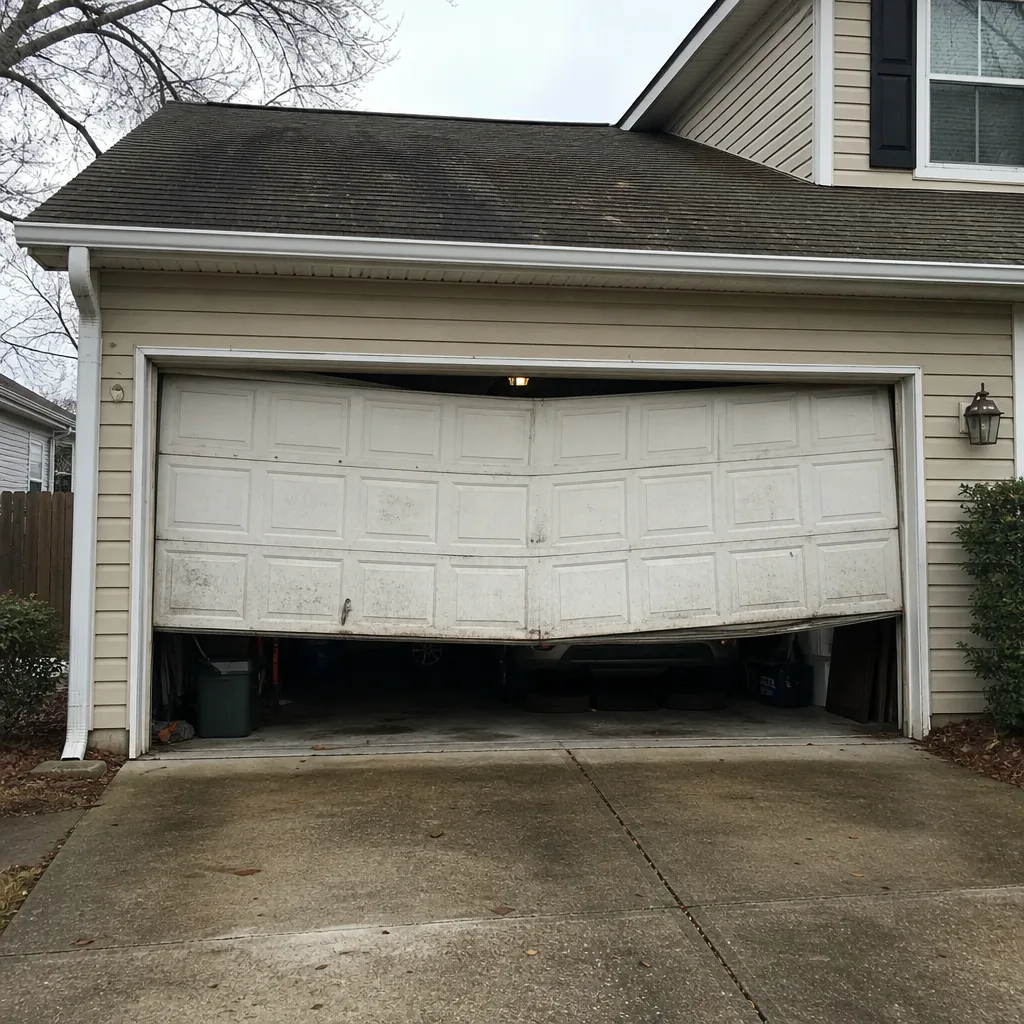 Before
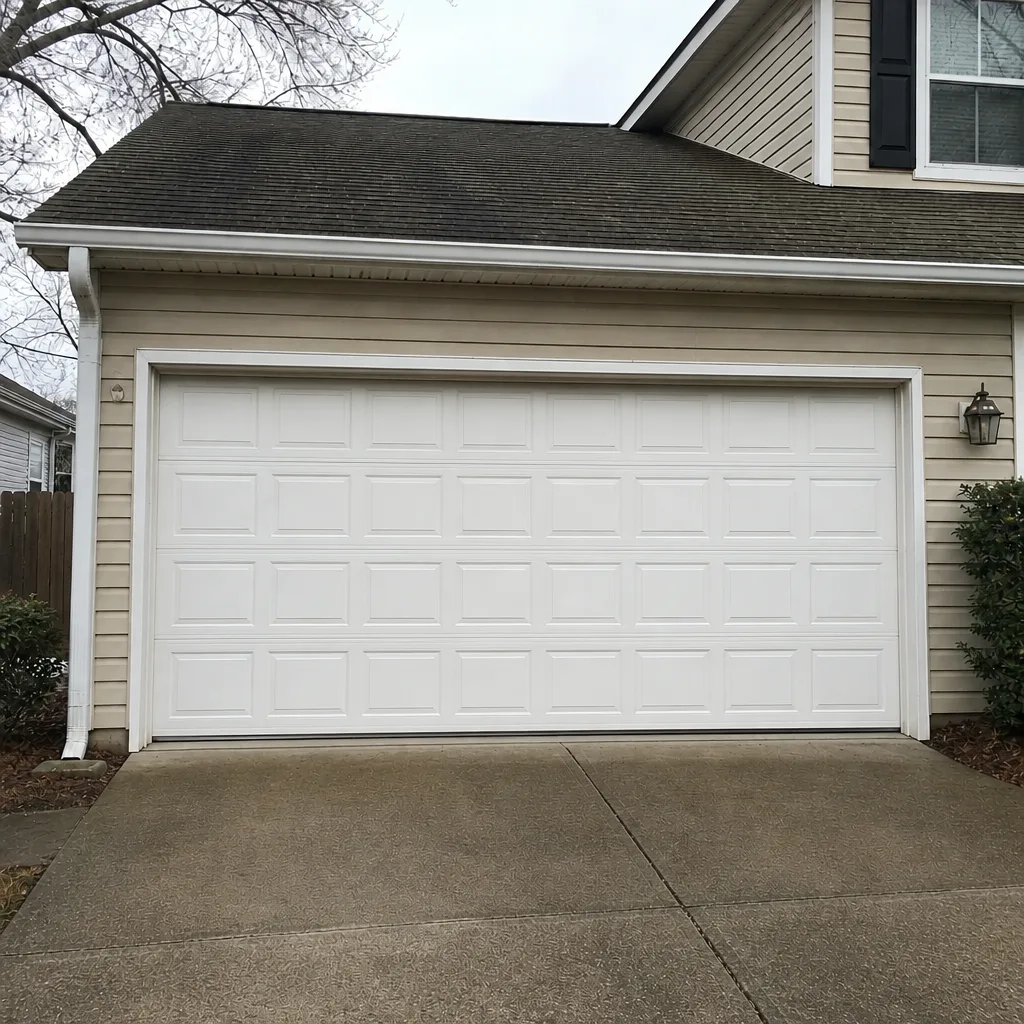 After
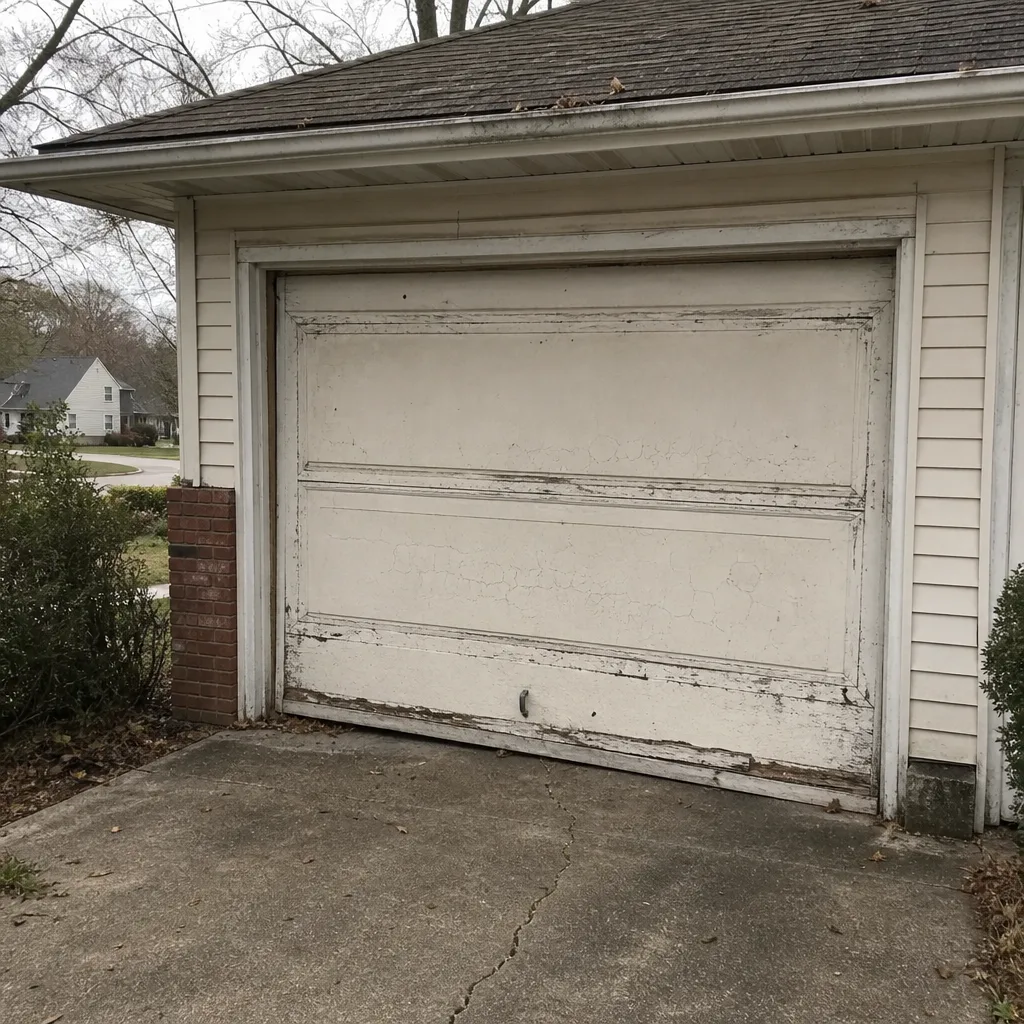 Before
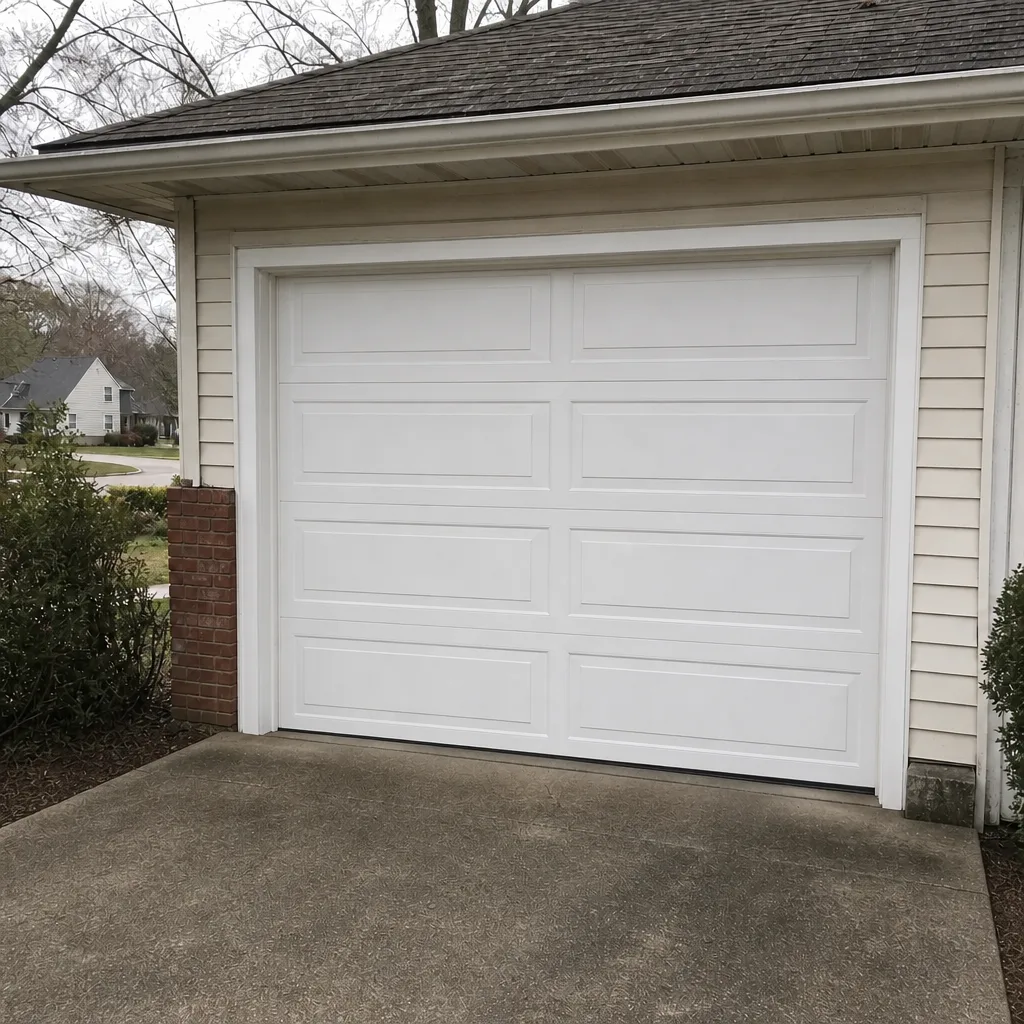 After
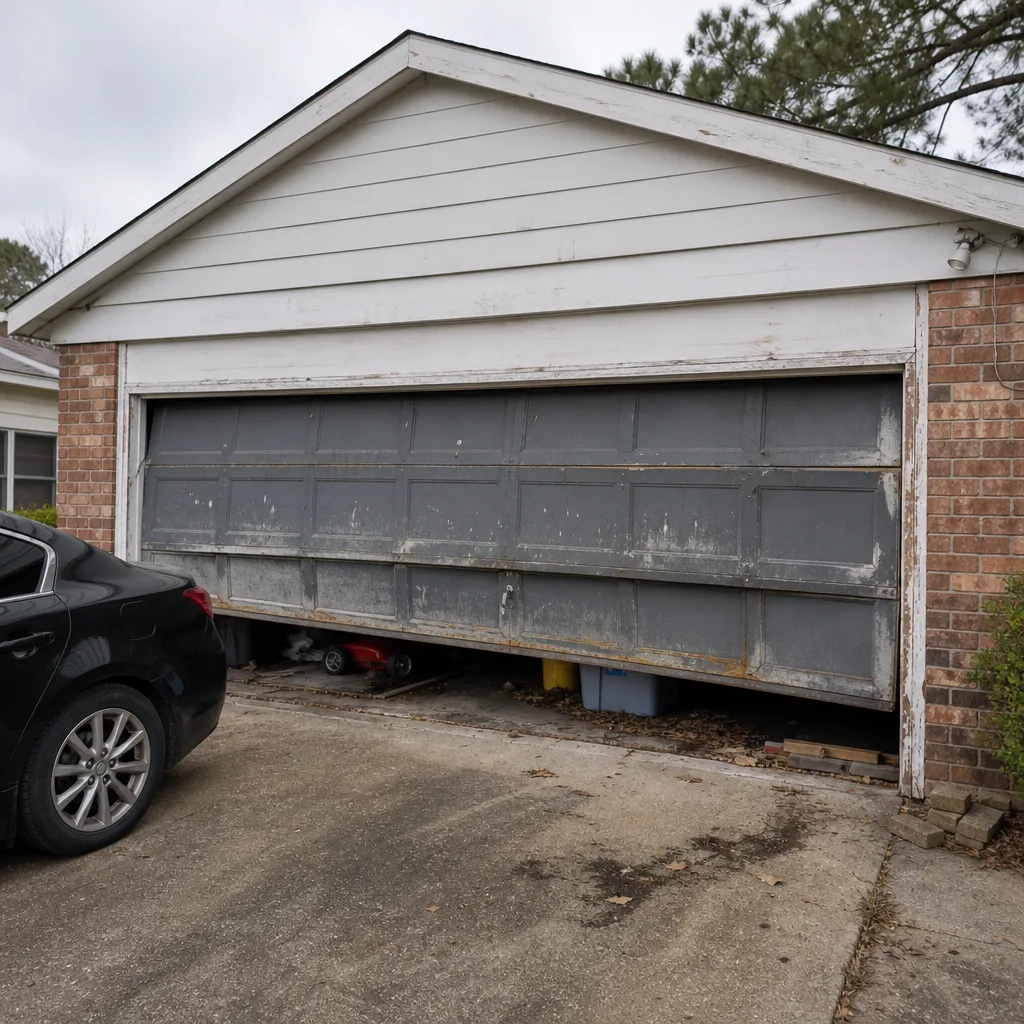 Before
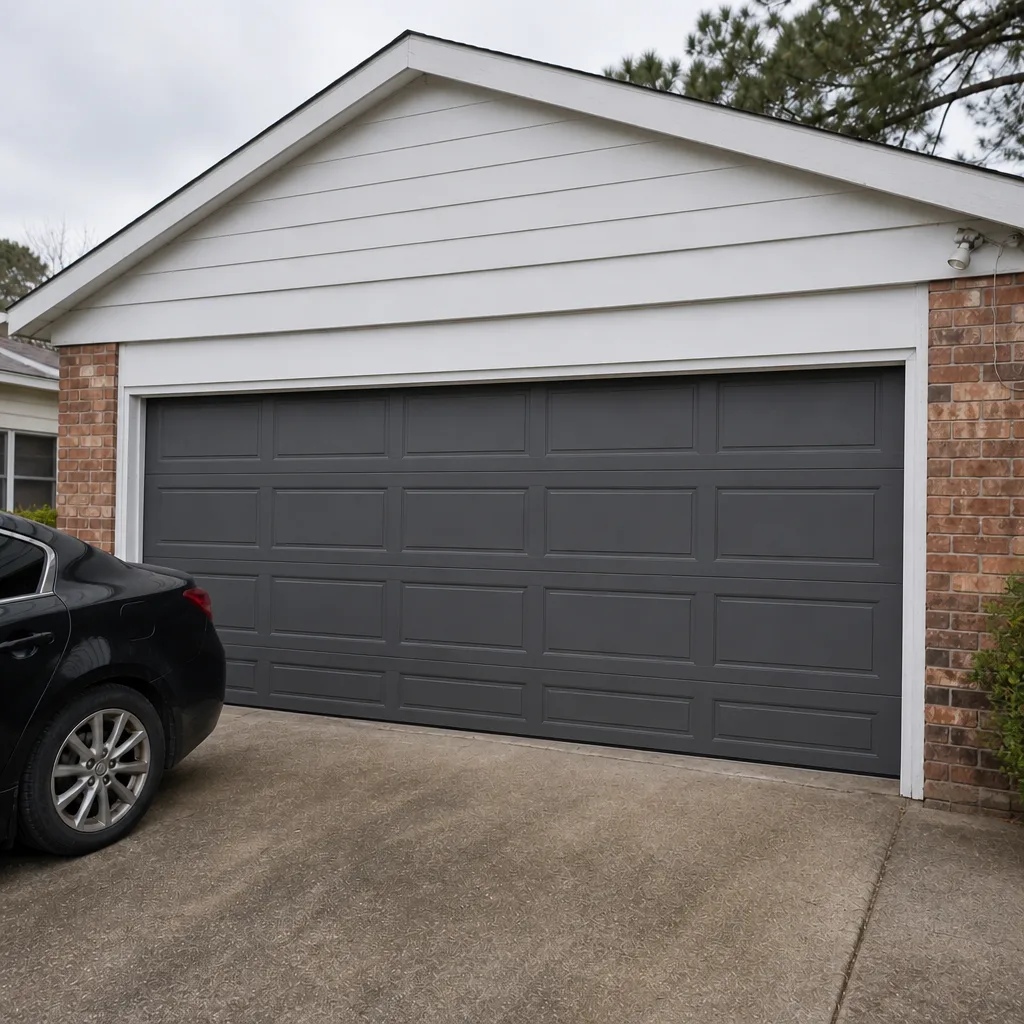 After
When to Call a Professional
Some garage door issues are safe to look at and some aren’t. If the door won’t open or close at all, if a spring is visibly broken (a clean gap in the coil is the giveaway), if a cable is loose or hanging, or if the opener cycles without the door moving, that’s a call-us situation. Torsion springs and cables are under extreme tension at all times, and touching them without training and the right tools is a serious injury risk. Electric openers and panel wiring carry their own electrical hazard. There are things to check yourself (the safety sensor alignment, the wall button, the remote battery) and things to leave to a trained technician (springs, cables, the logic board). If you’re unsure which side of that line you’re on, treat it as a professional job.
Charleston area homeowners can call us for a free estimate. Loyal Garage Door Service offers free estimates in Charleston, and our technicians have up to 11 years of experience. Call (855) 745-6192. We answer 24/7.
Frequently Asked Questions
Yes. South Carolina requires contractors to hold a license for the work they perform, and the license class depends on the scope and value of the job. Ask for the license number and classification, then verify it through the South Carolina Department of Labor, Licensing and Regulation public lookup before you book. Also ask for a certificate of insurance showing general liability, and workers’ compensation if anyone will be on your property. A contractor who can’t produce both is not a contractor you want working on your door. Call (855) 745-6192 for an exact quote on your repair; estimates are free.
Ask which opener brands they service and listen for specific names. “All brands” is the wrong answer; you want names. If they can’t tell you whether they service Wayne Dalton, Craftsman, Genie, or a specific LiftMaster model, they either don’t work on those systems or they’re steering toward what they sell. A brand-agnostic shop will answer quickly and specifically. Our technicians are trained across LiftMaster, Chamberlain, Genie, Clopay, Amarr, Wayne Dalton, Craftsman, and Raynor. Call (855) 745-6192 to confirm coverage on your specific system.
For repair jobs, same-day service is often possible if you call early. We answer 24/7, and fast dispatch runs from 7am to 7pm, Sunday through Friday. We’re closed Saturday, and a call outside dispatch hours is booked into the next opening. If your door won’t close or a spring has snapped, call and we’ll work through the schedule with you. If the job is a new door or full replacement, it’s measured, ordered and scheduled, so there’s no same-day on that. Call (855) 745-6192 for a free estimate.
Not without your agreement. We quote per job from a written estimate that breaks out labor and parts, and the price you agree to is the price you pay. Once we’re on site, we look at the whole system (springs, cables, track, hinges, opener, sensors) and if we find something that isn’t visible at the initial conversation, we re-quote and get your approval before proceeding. We don’t start work and then bill more than the estimate. That’s the point of getting it in writing. Call (855) 745-6192 for an exact quote; estimates are free.
A proper estimate itemizes labor separately from parts, lists part numbers and quantities, names the brand and model of any replacement opener or door, states warranty terms in plain language, and spells out the scope of the job with clear conditions that would change the price. Vague terms like “full repair” or “as needed” without detail are a warning sign. Read it before signing, and ask about anything unclear. The written estimate is what protects you from an invoice that doesn’t match what you agreed to. Call (855) 745-6192 and we’ll walk you through ours before you book.
Yes. Our technicians are state-licensed, insured and bonded, and we can produce the documentation before any work is scheduled. If you’re comparing contractors in Charleston, ask every one of them for the same. A license number you can verify and a certificate of insurance issued to your address are the minimum. Don’t accept a phone promise in place of either. Call (855) 745-6192 for a free estimate.
The Bottom Line
Hiring a garage door contractor in Charleston comes down to a few checks you can do before anyone arrives. Verify the license and insurance yourself. Ask specifically which opener and door brands the shop services, and listen for names rather than “all brands.” Refuse a quote given without an inspection, and insist on a written estimate that separates labor from parts and spells out the warranty. The specialist you want repairs first and replaces only when repair won’t hold, covers both the door and the opener, and tells you what’s wrong before touching anything. That’s a short list, and it eliminates most of what turns up in a search.
If you’re ready to get a straight answer on your door, call Loyal Garage Door Service at (855) 745-6192 for a free estimate. We answer 24/7. Fast dispatch from 7am to 7pm, Sunday through Friday. Our service area includes Charleston, and our technicians have up to 11 years of experience across the eight brands we service. Repair first. One call covers it. Loyal to the job.
Written by the team at Loyal Garage Door Service.