
Last updated November 15, 2026
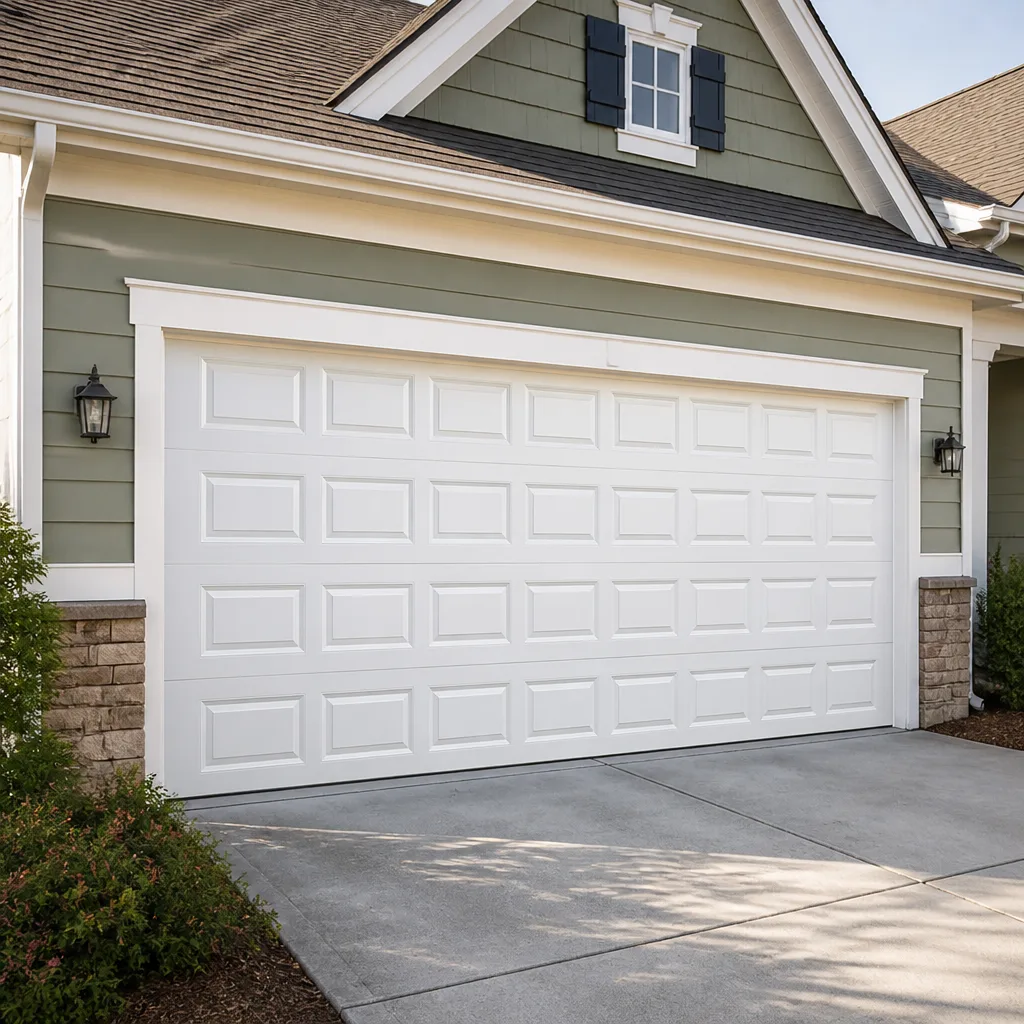 Raised-panel steel
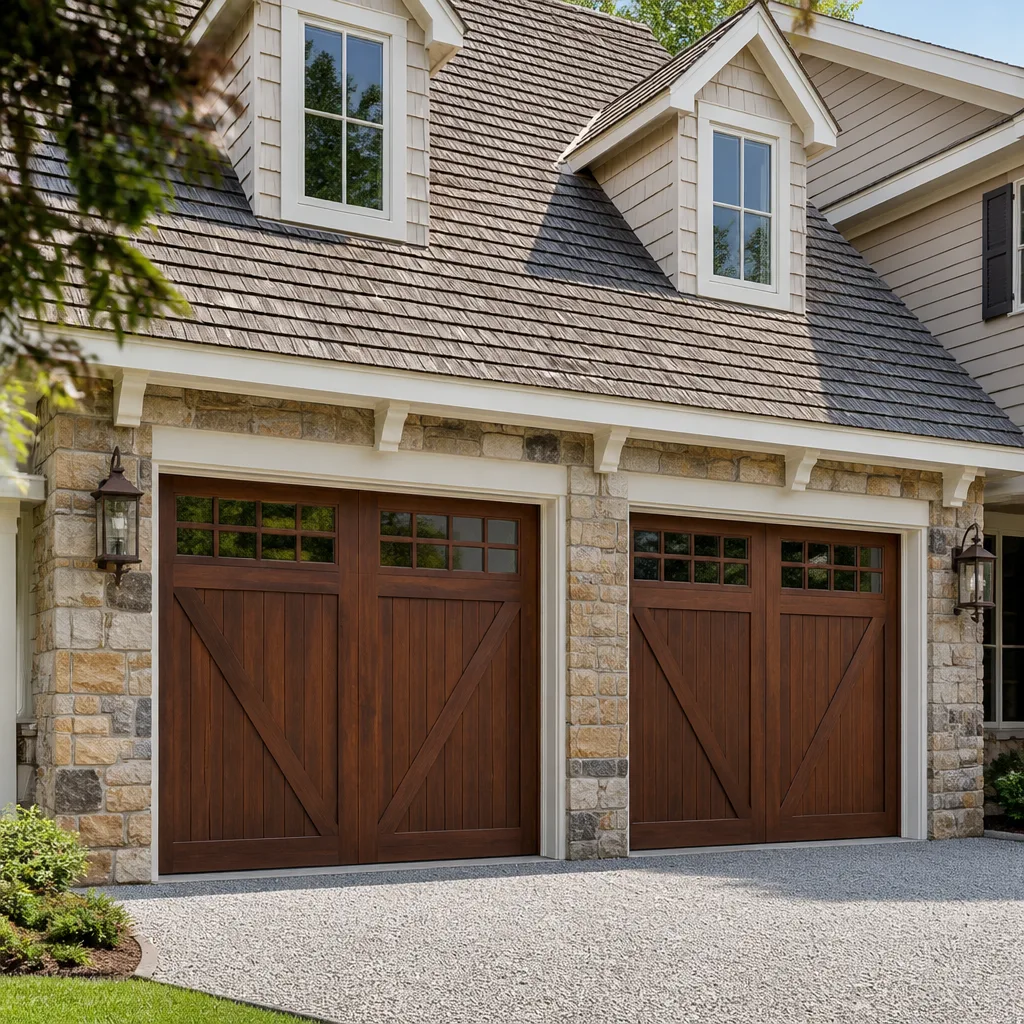 Carriage house
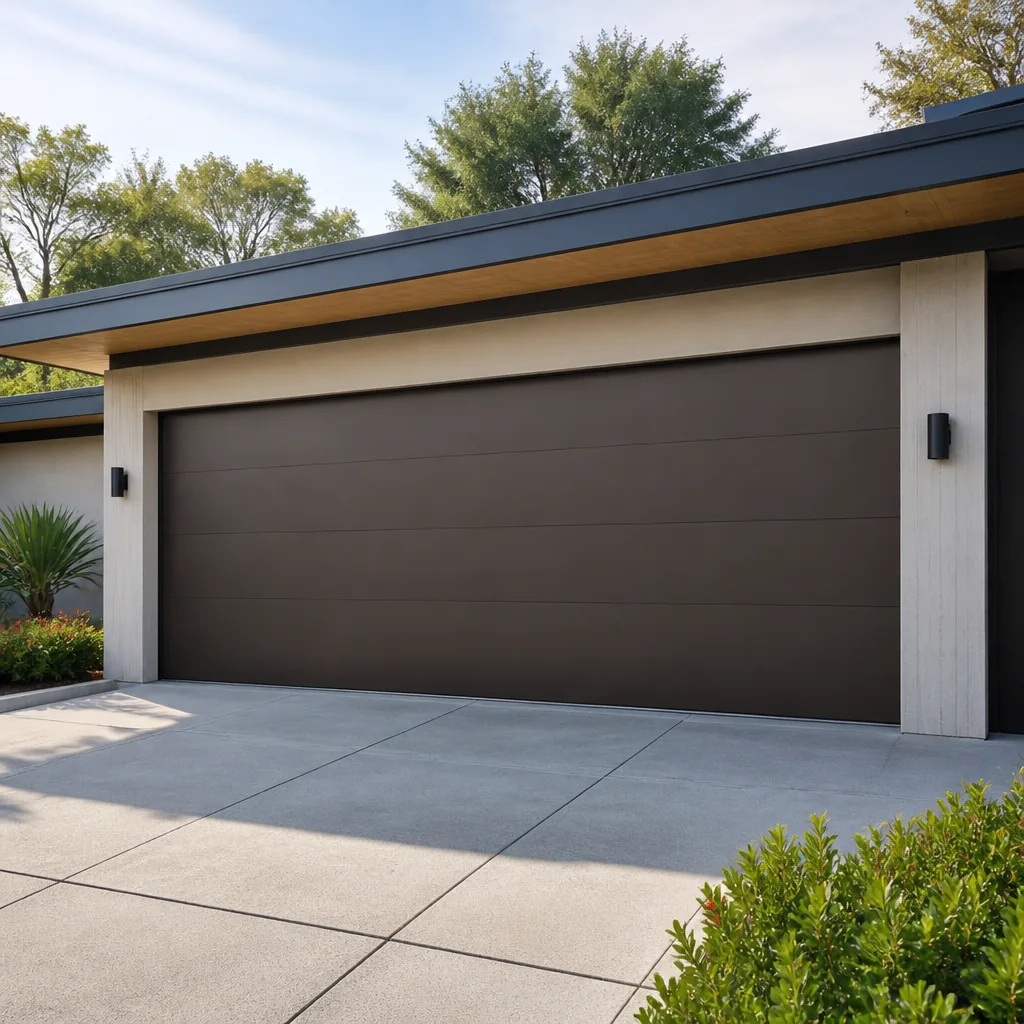 Modern flush
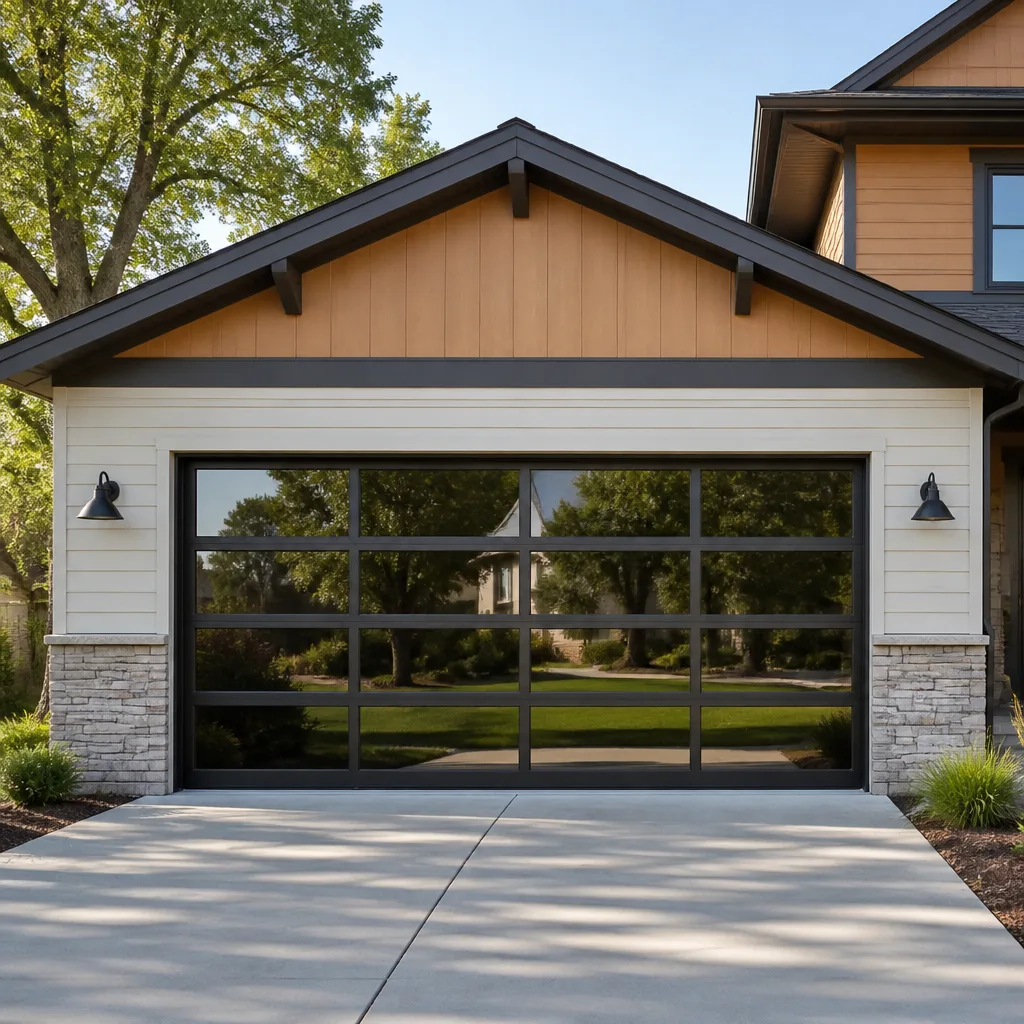 Full-view glass
 LiftMaster openers
 Chamberlain openers
Full 25-point door and opener safety check with every visit - springs, cables, rollers, tracks, and your LiftMaster or Chamberlain opener included
You get a price before we start. It does not change when the pro arrives.
Get your free estimateGarage Door Emergency Preparedness Guide for Charleston Homes
Most garage door advice is written for a Tuesday morning problem: the opener hums, the door doesn’t move, you’re late for work. Charleston needs a second set of instructions, because for a few weeks each hurricane season the same door becomes a structural question. When a storm is forecast, the garage door is usually the largest opening in the house, and whether it holds determines how much of the house stays dry. Nearly every homeowner here has had a moment of standing in the driveway doing the math on 48 hours of warning and wondering whether the door was ever built for this. This guide covers both emergencies: the ordinary breakdown and the storm you can see coming.
Quick Answer
A garage door emergency in Charleston splits into two situations. For a door that won’t open or close, the fix is usually the spring, cable, or opener, and a trained technician should handle it because those parts hold serious tension. For a storm, the work is preparation: know how to release your opener by hand, know whether your door is rated for the wind zone you’re in, and secure the door before landfall rather than during a power outage afterwards. The two plans overlap, and this guide walks through both.
Styles & brands we work with
- Raised-panel steel
- Carriage house
- Modern flush
- Full-view glass
- LiftMaster openers
- Chamberlain openers
Table of Contents
- The Two Kinds of Garage Door Emergency in Charleston
- How to Open Your Garage Door During a Power Outage
- What “Hurricane-Rated” Actually Means in South Carolina
- The 36-Hour Pre-Storm Protocol
- Bracing Options for Doors That Aren’t Rated
- Post-Storm Inspection: What to Check Before Running the Door
- Who to Call After a Storm in Charleston (and Who to Avoid)
- Everyday Habits That Prevent the Tuesday Morning Breakdown
The Two Kinds of Garage Door Emergency in Charleston
The word “emergency” does a lot of work in this trade. A broken torsion spring at 7am on a workday is an emergency because your car is trapped and your day is gone. A garage door that hasn’t been checked since last summer and is now facing a named storm is a different kind of emergency, quieter and more expensive, and it gives you two days to solve it. Charleston homeowners deal with both, and they call for different reasons.
The first kind is mechanical. Springs fatigue, cables fray, opener gears wear, and the door comes off its track. These failures happen without warning and usually can’t wait. The second kind is structural and seasonal. It’s about whether the door can resist wind pressure and wind-borne debris, and it’s answerable ahead of time with a look at the door, its label, and the track.
Here’s the part most people miss: the same reinforcements that hold a door in a storm also make it last longer day to day. A door with proper horizontal bracing and solid hinge attachments takes daily open-and-close cycles better than one without. Preparing for the storm you may never see is also maintenance for the door you use twice a day. That’s the thesis of this whole guide, and it’s why we write preparedness the way we do.
If you’re reading this before a storm is on the radar, good. That’s the time to make the plan. If you’re reading it with a storm already on the forecast cone, skip ahead to the pre-storm protocol and the bracing section, then come back.
How to Open Your Garage Door During a Power Outage
Every automatic garage door opener has a manual release, and it’s the single most useful thing a homeowner can learn before they need it. The release lets you disengage the door from the opener so you can lift it by hand. The tricky part is that the two most common designs work differently, and lifting a disengaged door the wrong way can send it down hard.
Safety first, and this matters more than any step below: a garage door is held up by springs and cables under extreme tension, and a door that has lost spring tension when you disengage the opener can come down fast. Never stand under a door you’ve just released, keep hands and feet clear of the hinge line, and if the door feels too heavy to lift or drops when you test it, stop. That’s a spring failure, and it’s a technician’s job.
For a belt-drive or chain-drive opener with a ceiling-mounted rail (the layout on most LiftMaster and Chamberlain units, and most Genie and Craftsman units too):
- Close the door fully. Never disengage a door that’s already partway open.
- Find the release cord, usually a red handle hanging from the rail near the door.
- Pull the cord down and toward the door. You should hear the carriage click free of the trolley.
- Lift the door slowly by hand. A well-balanced door lifts with one hand and stays where you leave it.
- If you need to leave it open, that’s fine, but never leave it half-open unattended in a wind.
Screw-drive and jackshaft openers use the same release principle but place the mechanism differently. On a jackshaft (side-mount) opener, the release is on the side unit, not the ceiling, and it disengages the door from the drive shaft rather than a rail carriage. For units with a wall-mounted release handle, pull the handle and the door releases at floor level, which is easier when the car is in the way.
When power comes back, re-engage by lifting the door and pulling the release in the opposite direction, then run the opener once with no cargo in the way to confirm it grabs. If the carriage clicks but the door doesn’t move with the opener, the trolley didn’t catch. Try again before assuming the opener failed.
What “Hurricane-Rated” Actually Means in South Carolina
A hurricane-rated garage door is one tested and labeled to resist specific design wind pressures for its location, and in South Carolina that standard lives in the state building code and your local jurisdiction’s plan-review requirements. The label on the door is the proof. If there’s no label, there’s no proof, and a door that might actually be rated is being treated as unrated by anyone who asks.
The catch is that “rated” is location-specific. A door rated for one coastal wind zone may not meet the pressure requirement for a different zone, and a door rated for the house it was installed on may not be rated once it’s been modified with a different opener, a different glass panel, or a replacement section. The rating attaches to the whole assembly: door, tracks, hinges, and the anchoring into the framing.
How to check whether your current door qualifies:
- Find the label. It’s usually on the inside of the door panel or on the door jamb, and it states a design pressure rating.
- Check the hardware. Look for reinforced hinges, heavy-gauge track brackets, and horizontal bracing, which are common on hurricane-rated assemblies and usually absent on builder-grade ones.
- Ask about the wind zone. Whether a particular rating is enough depends on your location in a county’s wind zone map, which your city or county building department can tell you.
- Bring in a technician. A five-minute inspection and a look at the label can tell you in plain terms whether your current door has a documented rating.
Doors carrying a rated assembly from brands like Clopay or Amarr are common in Charleston, and so are builder-grade doors that never carried a rating. If you have a door from either brand and you’re unsure which side of the line it falls on, we work on what you already have and can tell you what the label and hardware say. If it turns out the door isn’t rated, the honest answer isn’t always “replace it.” Sometimes bracing gets you through, which is the next section.
The 36-Hour Pre-Storm Protocol
Once a storm is forecast, the clock matters, and the order of operations matters more. Thirty-six hours out is the sweet spot: late enough that the storm track has real information, early enough that a technician can still schedule a visit and you’re not doing anything dangerous in rising wind. Here’s the sequence.
- Inspect the door’s outside face. Look for loose hinges, sliding panels, or screws backing out. Small hardware issues become flying hardware in sustained wind.
- Do not lock the door into an automatic mode. This is the mistake we hear about most. Some smart openers let you lock the door so it won’t operate remotely during an alert, which sounds helpful until the power fails and you can’t override the lock without going back through the app or the wall control. Find the manual release and test it before the storm, not during.
- Test the manual release by hand. Disengage the opener, lift the door, and confirm it lifts and holds with reasonable effort. Re-engage. If the door is too heavy or drops, stop lifting and call for help before the storm, not after.
- Back the car out of the garage. An empty garage floor has less to damage and less to fly.
- Close and secure the door. Close it fully, pull the manual release back into engaged position so the door stays locked to the opener, and confirm the latch or lock bar, if your door has one, is set.
- Move anything loose away from the door’s inside face. Trash cans, shelving, and tools become projectiles when wind gets in.
- Charge the backup. If your opener has a battery backup in the head unit, charge it now. If you don’t have one, that’s a good upgrade to put on the list once the storm passes.
What not to do: don’t prop the door partway open to “let the pressure equalize.” That’s a way to make the failure worse. Don’t tape windows on the door and consider it protected. And don’t try to lift a heavy door with a car jack or a pry bar to get the car out during the storm. The door can wait. You can’t.
Bracing Options for Doors That Aren’t Rated
If your Charleston door isn’t rated, you still have options before landfall, and not all of them cost a new door. Bracing works by pushing the door back against the opening so wind pressure can’t bow the panels inward, which is how most garage door wind failures start.
What’s used, roughly in order of weight and cost:
- Interior vertical posts. Adjustable steel or wood posts wedged between the floor and the door’s horizontal bracing, braced against the back of the door. Quick to install, removable after the storm, and the least committed option.
- Horizontal bracing kits. Additional struts added to the inside of the door, typically bolted along its width, that stiffen the panels against wind load. These become a permanent part of the door and can help day-to-day rigidity too.
- Reinforced hinges and brackets. Swapping standard hinges for heavy-duty ones and adding track brackets where the factory could save a few dollars. These don’t turn a builder-grade door into a rated one, but they do reduce the odds of a hinge tearing out.
- Storm shutters or panel systems. Covers for the door, matched to the pressure rating they claim. These are usually part of a whole-house plan and are only as good as their installation.
Be skeptical of anything sold as “hurricane protection” without a stated design pressure rating. Homemade wood bracing is better than nothing, but it’s not a rating, and we’d be lying if we told you otherwise. Bracing can reduce the risk of a door failing; it doesn’t make a non-rated door meet code. If you’re weighing between temporary bracing and a rated replacement door, that’s a decision worth talking through with a garage door specialist rather than a general contractor who doesn’t work on doors.
Post-Storm Inspection: What to Check Before Running the Door
After a storm passes, the temptation is to hit the opener and see if it works. Don’t run the door until you’ve looked at it, because a door with a shifted track or a stressed cable can come down when powered up. Here’s what to check, in order.
- Look up the track. Tracks that have bent, pulled away from the wall, or gone out of parallel are a reason to stop. A door running on a bent track can jump out of it.
- Check the panels. Dents larger than your palm, bowing, or panels that have popped out of their hinges are signs of impact or pressure damage. Panels that look fine but feel loose at the edges need a technician’s eye.
- Check the cables and springs. A frayed cable, a spring that looks stretched or crooked, or a door that won’t lift by hand all point to the lifting mechanism. Those parts are under tension. Don’t touch them.
- Check the hinges and rollers. Look for torn hinges, rollers out of their tracks, and bolts that have backed out. Loose hardware on one panel is a reason to stop, not to tighten and carry on.
- Check the door’s balance. Disengage the opener and lift the door by hand to about waist height. It should hold there. If it drops, the spring has lost tension. Re-engage and call.
- Check the opener housing and wall control. Any water inside the unit, or a wall control that doesn’t light, means don’t power it until it’s been looked at.
- Only then, cycle the door once. With nothing under the door and the doorway clear, run it once and watch the whole travel.
If anything fails the list, leave the door where it is. Debris damage is a repair, and repair is what we do. Using a door that has a hidden track or cable problem turns a repair into a replacement.
Who to Call After a Storm in Charleston (and Who to Avoid)
After a hurricane, every door in Charleston that failed will get a quote from someone, and not all of them will be from people who work on garage doors the rest of the year. Storm-chasing contractors are a real thing in the door and roof trades, and they follow the path of the damage. The tells are consistent, and you can spot most of them before anything is signed.
Signs to slow down and ask more questions:
- They show up unrequested with no local business presence and no fixed process for coming back if something goes wrong.
- They quote a full door replacement before they’ve looked at the springs, cables, and tracks. A door with a bent track is a repair, not a replacement.
- They can’t speak to your door’s brand or opener’s brand by name. If you have a Wayne Dalton door and a Craftsman opener, someone who works on garage doors will know both, and someone passing through won’t.
- They ask for a deposit in cash before any written estimate. Reputable work goes estimate first, then approval, then work.
- They pressure you to decide before you can get a second quote. A storm creates urgency, but a real garage door specialist can tell you what’s urgent and what can wait a week.
What to say when you call, so the visit is useful: your door’s brand, the opener’s brand and model if it’s visible on the unit, what happened (didn’t open, opened and stuck, bent in the wind, won’t close all the way), and which parts you’ve already looked at. That short description is the difference between a technician who brings the right parts and one who comes out to diagnose twice.
We’re a garage door company, and we work on the door and the opener under one visit, which is useful after a storm because it’s often unclear which one failed. We’re trained on LiftMaster, Chamberlain, Genie, Clopay, Amarr, Wayne Dalton, Craftsman, and Raynor equipment, so whether your door is a builder-grade model or a rated assembly from a few storms back, it gets looked at by someone who recognizes it. Call us for garage door repair after a storm and you’ll get a written estimate before anyone touches the door.
Everyday Habits That Prevent the Tuesday Morning Breakdown
The best emergency plan in Charleston is the one you never use, and most garage door failures give some warning. The trick is knowing what to listen for and what to look at. A door that’s been quietly getting worse for months usually announces itself with sound, feel, or sight, and any of those three is enough to book a repair before it becomes a morning call.
Listen for it. Grinding, scraping, popping, or a single loud bang are the usual suspects. A bang that comes from the spring area, with the door suddenly hard to lift, means a spring broke and the door shouldn’t be run. A rhythmic squeak means rollers or hinges need attention. An opener that grinds but doesn’t move the door is usually a gear or belt problem in the head unit.
Feel for it. A door that’s gotten heavier to lift by hand, or one that drifts down instead of holding when opened halfway, has a spring or balance issue. A door that shimmies as it closes has a track or roller problem.
Look for it. Springs should look straight and tight. Cables should be clean and smooth. Tracks should be straight and parallel. Hinges should be tight to the panels. Bolts should be snug. Any of these that doesn’t look right is worth a call before the next storm season.
And do one thing on a schedule: test the manual release by hand once a season. Lifting a disengaged door tells you in ten seconds whether the balance is healthy. If it feels wrong, you’ll know before a storm makes it a priority. Opener service is also worth putting on the list. Our garage door opener repair work covers everything from a belt replacement to a wall control that won’t respond, and it’s all on the same call as the door itself. If you’re in Charleston, one visit handles both.
Common Mistakes to Avoid
- Trying to fix a spring yourself. Torsion springs hold the weight of the door, and a spring that suddenly releases can cause serious injury. This is the one part of the door that a homeowner should never touch.
- Locking the door into an automatic mode before a storm. It sounds convenient, but if the power goes out, the manual release can be obstructed by the lock. Use it in fair weather, not ahead of a storm.
- Running the door after a storm without a visual check. A bent track or popped hinge can come down with the opener’s first cycle.
- Assuming a door is rated because of its brand. Same brand, different assembly, different rating. The label on the door tells you what it’s rated for, and the brand alone doesn’t.
- Letting an unrelated handyman work on the door’s springs, cables, or opener. Garage door repair is its own trade. A general handyman who works on doors as a side job is fine for hanging a shelf, not for a spring replacement.
- Waiting for a full breakdown before calling. A grinding opener or a heavy door is a warning. Repairing it as a scheduled job is cheaper and less disruptive than an emergency call.
- Replacing a whole door because the opener failed. The door and the opener are separate systems. A failed opener is an opener repair, and we’d rather tell you that than sell you a door you don’t need.
See the difference
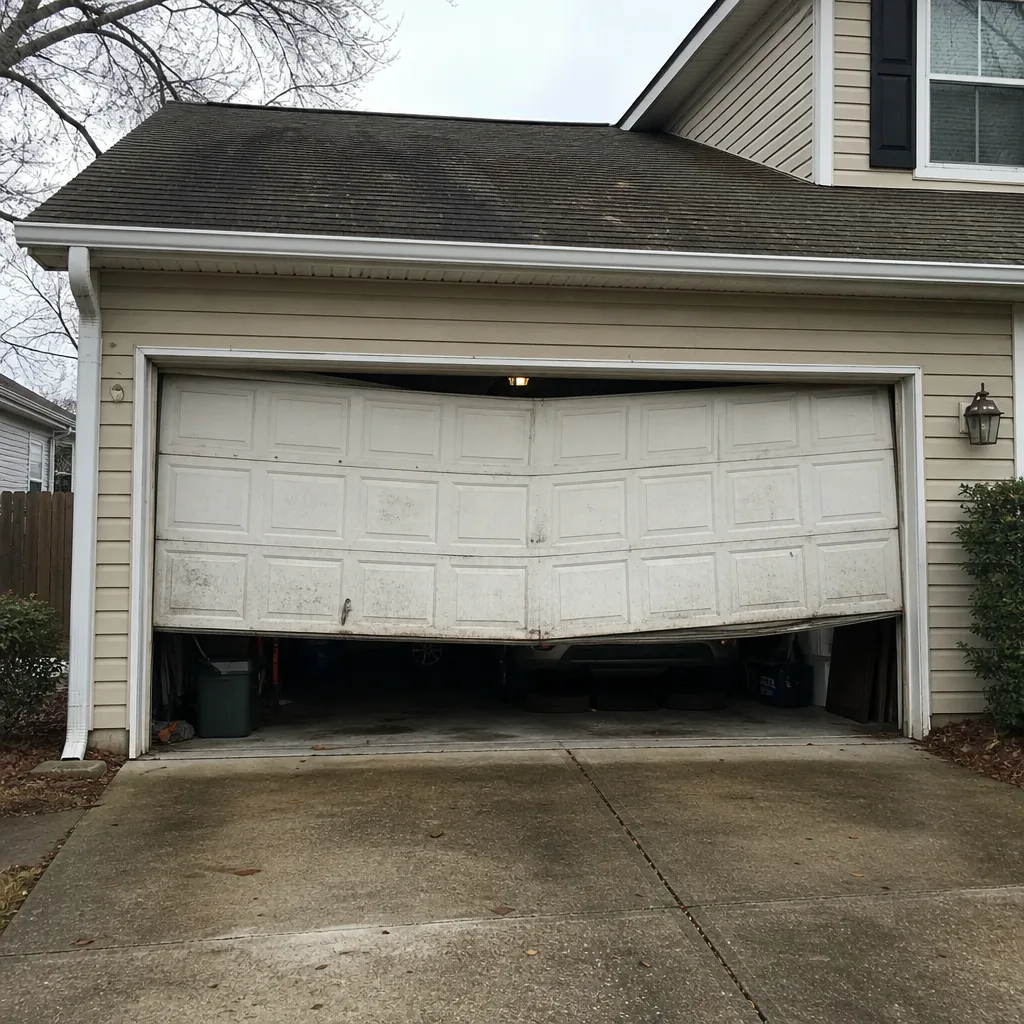 Before
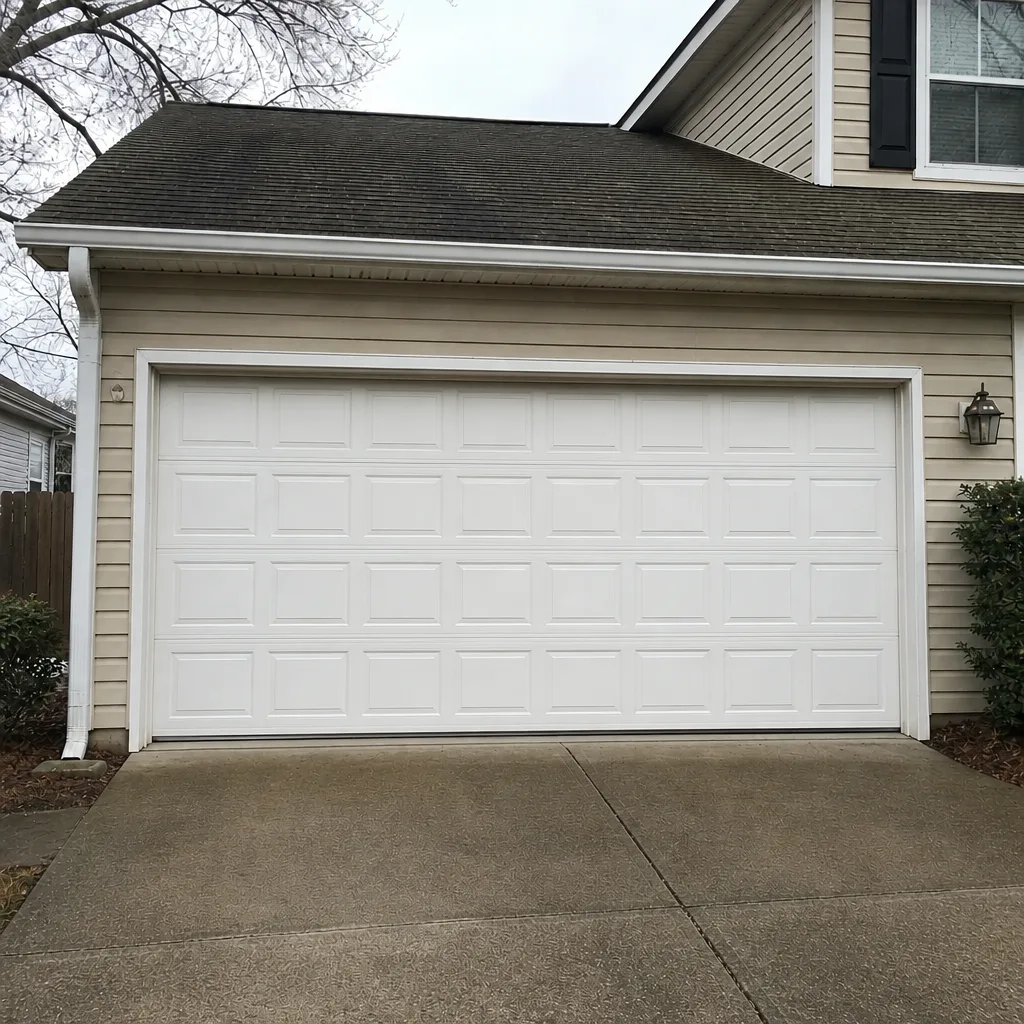 After
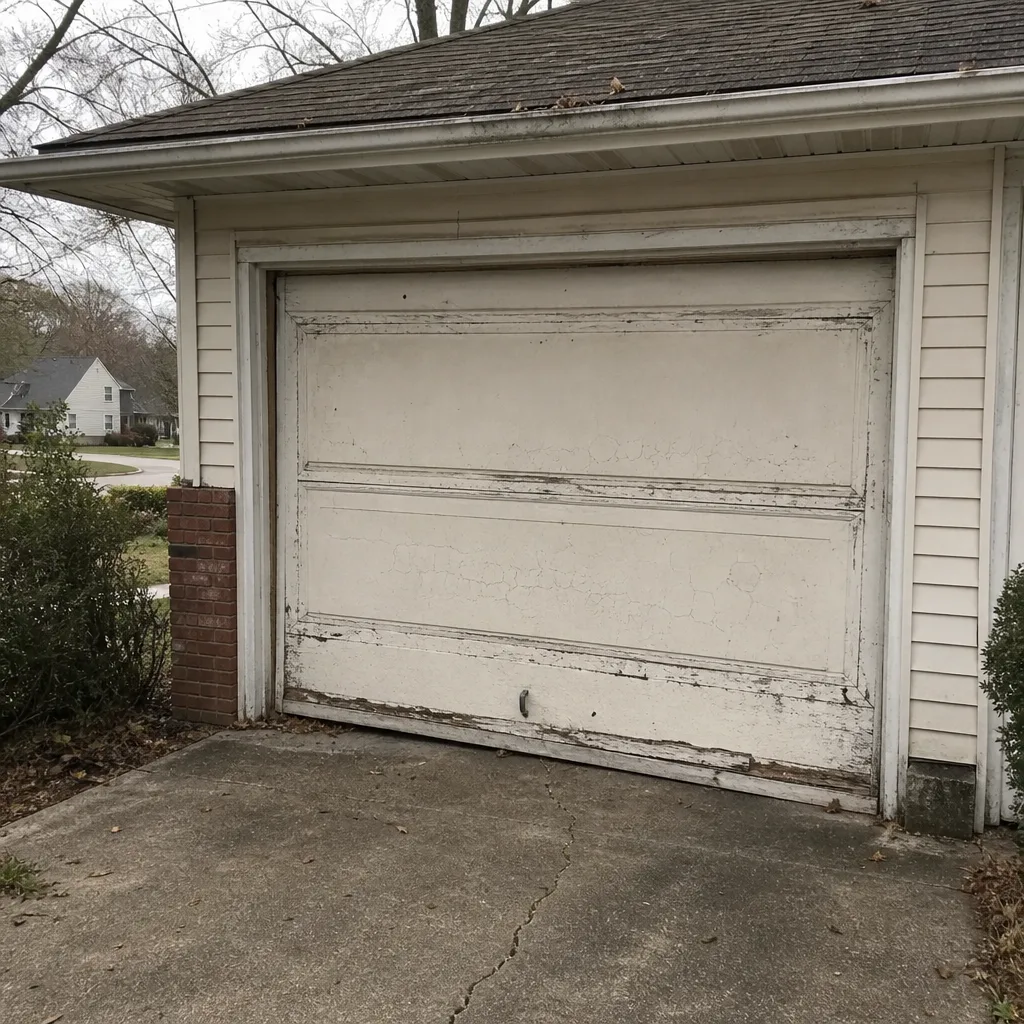 Before
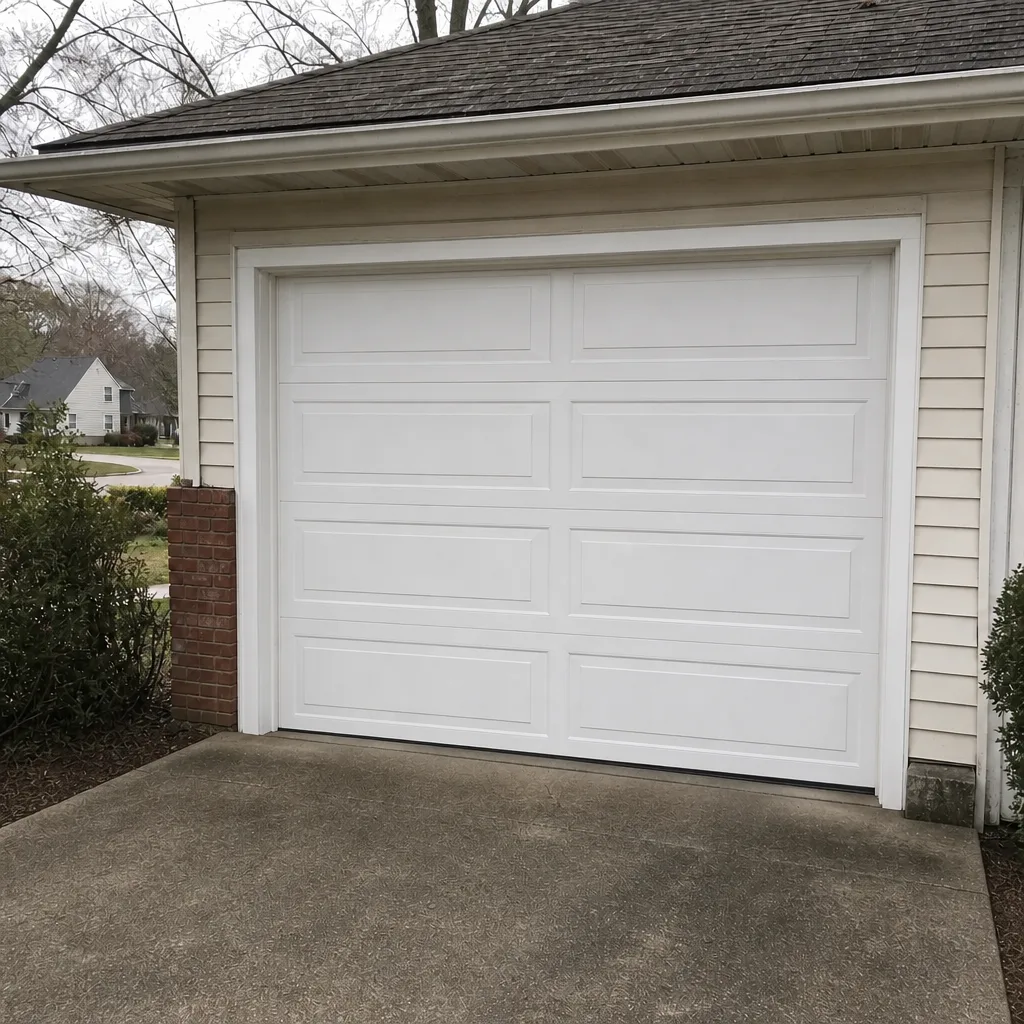 After
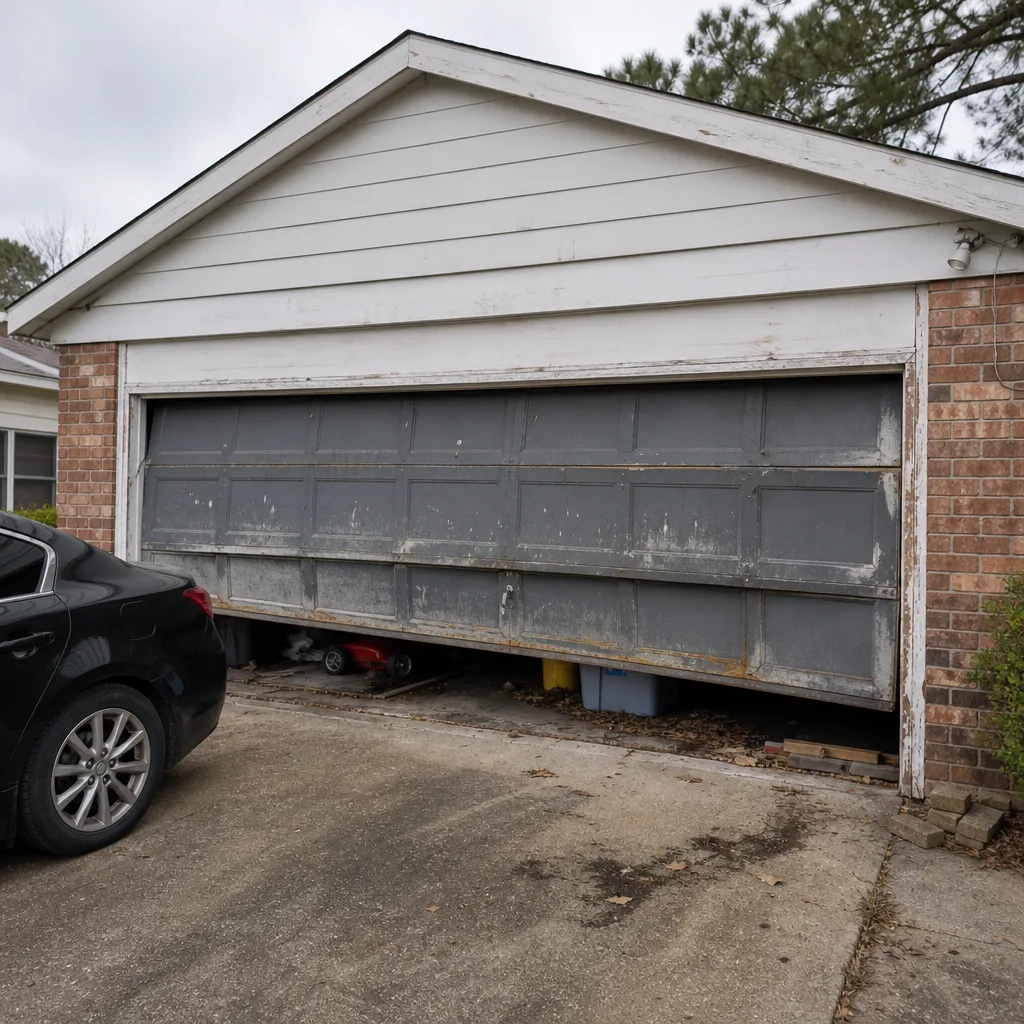 Before
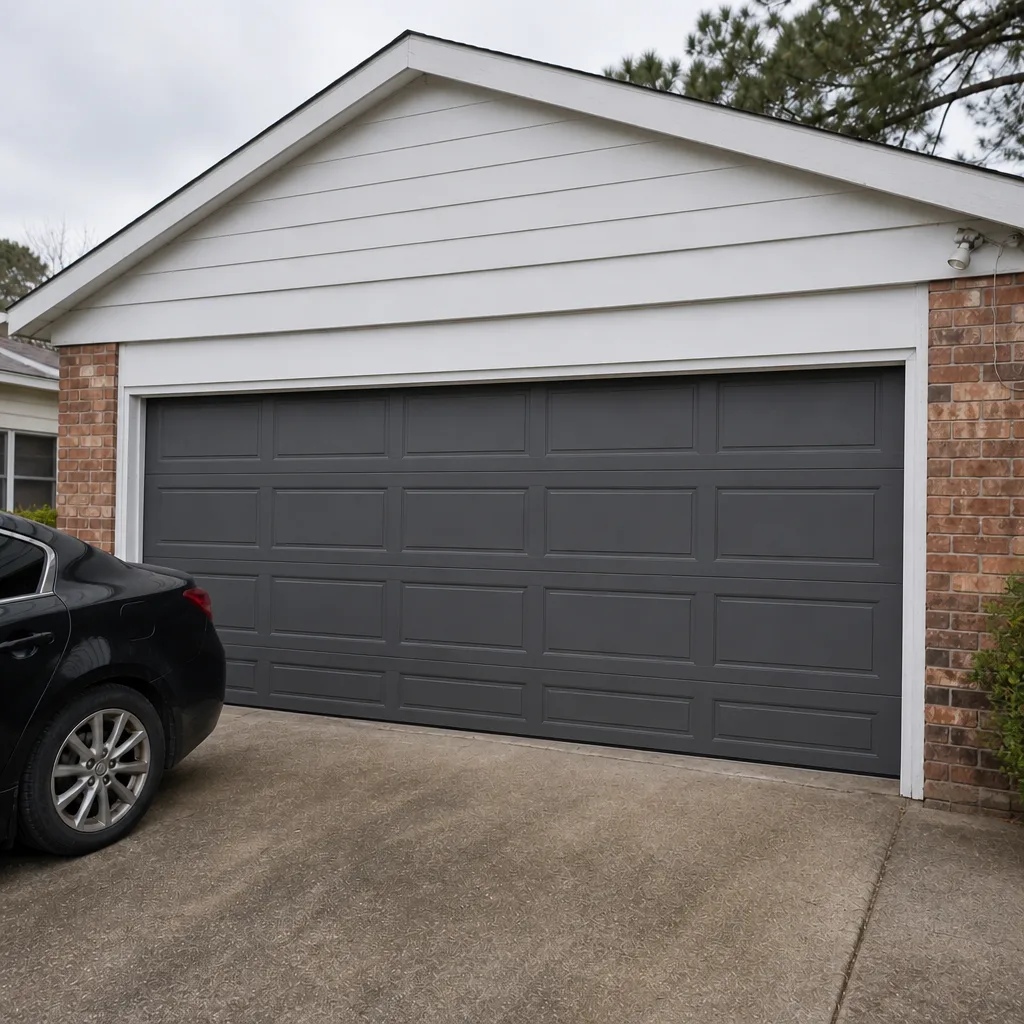 After
When to Call a Professional
Some garage door problems are a phone call. A spring that’s broken, a cable that’s frayed, a door that won’t lift straight, a door that has come off its track, a storm that has bent a panel or shifted a hinge, or an opener that runs without moving the door, all belong in this category. The common thread is tension and alignment. Springs and cables store energy, and a door that’s off its track is one bad cycle away from a worse problem. Those aren’t DIY repairs, and we’d rather say that plainly than sell you a repair kit.
We also want to be honest about what isn’t an emergency. A squeaky roller can wait. A door that opens a little faster than it used to can be looked at on a normal call. A wall control that’s gone dim may just need power cycled. Repair first, and the written estimate sets the final price before we start.
Loyal Garage Door Service offers free estimates in Charleston. Our technicians have up to 11 years of experience, and we work on the door and the opener in the same visit. Call (855) 745-6192. We answer 24/7. Fast dispatch from 7am to 7pm, Sunday through Friday.
Frequently Asked Questions
Pull the manual release cord hanging from the opener rail, which disengages the door from the opener, then lift the door by hand. On a side-mount (jackshaft) opener, the release is on the side unit rather than the ceiling. Test the release before a storm, not during one, and never stand under a door you’ve just released because a door that has lost spring tension can drop. If it feels too heavy to lift, stop and call us.
A hurricane-rated door has been tested and labeled to resist specific design wind pressures, and the proof is the label on the door or jamb. In South Carolina, whether a rating is enough depends on the wind zone your home falls into, which your city or county building department can confirm. A door with a rated assembly from Clopay or Amarr is common here; a builder-grade door usually isn’t rated. Call (855) 745-6192 for a free estimate if you’re not sure what you have.
Same-day service is often available for garage door and opener repairs. Call (855) 745-6192 and we’ll book the closest opening. We answer 24/7, and a call outside dispatch hours is booked into the next opening, Sunday through Friday, 7am to 7pm. If the door is a storm-damaged door or the spring has broken, tell us on the call so the technician arrives ready.
No. The written estimate sets the price, and it’s agreed before any work starts. If we find something on site that changes the scope, you’ll hear about it before anyone touches the door, and you’ll get a revised estimate rather than a surprise invoice. That’s part of what the name Loyal means to us.
Our technicians are experienced garage door specialists, trained on the door and opener brands we work on, and the work is covered by our insurance. We’re also brand-agnostic: if you have a Wayne Dalton door with a Craftsman opener, or a LiftMaster unit on an Amarr door, it’s all on the same visit. Ask us anything you want to know on the call.
Ask three questions: what’s the written estimate, which brand and model did you identify on the door, and are you coming back if something goes wrong? A garage door specialist will name your brands and inspect before quoting. Someone passing through usually quotes a replacement before looking at the springs. Repair first, estimate in writing, and get the work itemized before you sign anything.
The Bottom Line
Charleston homeowners get two garage door emergencies, and both are manageable with a plan. For the everyday breakdown, know the signs (grinding, heaviness, a loud bang) and call a specialist before the door comes off its track. For the storm, know your manual release, know whether your door has a documented rating, know the 36-hour order of operations, and know what to check after the storm before you press the button. The same preparation serves both: a door that’s balanced, braced, and correctly rated is a safer door in a hurricane and a more reliable door on a Tuesday morning.
Contact Us
If you’re in Charleston and you want a straight answer on your door, our team is ready. We repair garage doors, repair openers, and install new doors, and we work on the equipment you already have, whether that’s a LiftMaster opener on a Clopay door or a Craftsman system on a Wayne Dalton. Call (855) 745-6192 for a free estimate. We answer 24/7. Fast dispatch from 7am to 7pm, Sunday through Friday. Before any work starts, you’ll have a written price, and that price is what you pay. One call covers the door and the opener, so you don’t need two companies for one problem.
Written by the team at Loyal Garage Door Service.